

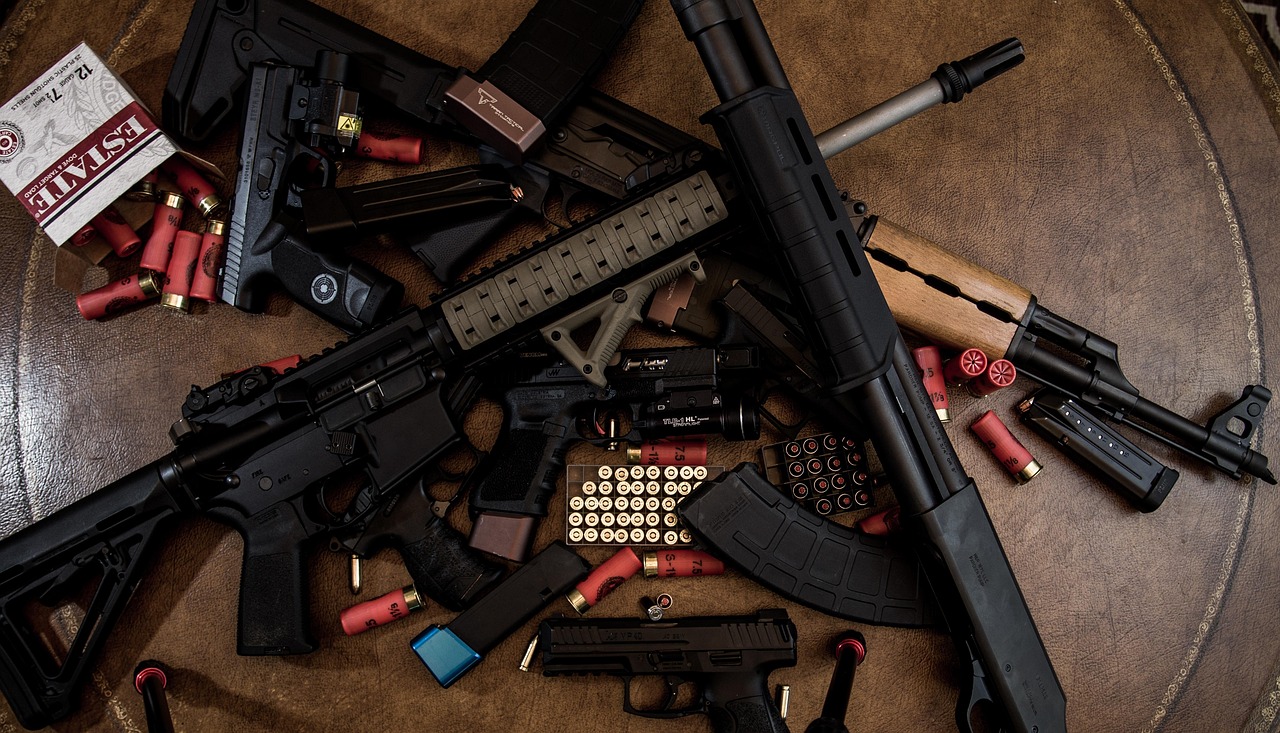
Scientific specialists in the field of “criminal organizations” estimate that 500,000 firearms have already been sold to criminal organizations from Ukraine – mainly submachine guns and machine guns. They estimate that sixty percent of the weapons delivered to Ukraine have already disappeared from the country. A recent interview with a criminologist on RAI sheds light on this highly dangerous situation, which is largely ignored by the mainstream media. (cm)
Pierluigi Mele: Professor Musacchio, what is currently happening with regard to the arms trade in Ukraine?
Vincenzo Musacchio: Ukraine represents a real catastrophe, unprecedented in this respect, since almost 500,000 firearms have disappeared during these three years of war. Among the missing weapons are assault rifles, precision rifles and automatic pistols. Due to this situation, mafia groups are making a fortune because no one has bothered to trace the weapons that were and continue to be delivered to Ukraine. Russian and Ukrainian mafia groups dominate the black market, selling weapons capable of blowing up even armored vehicles to the highest bidder (terrorists, mafia groups, ordinary criminals). This is not the first time that organized crime has profited from war. I often remind my students how the ‘Ndrangheta bought a large number of weapons from the conflict in the former Yugoslavia. During subsequent seizures, law enforcement agencies discovered highly dangerous weapons such as bazookas, explosives and Kalashnikovs. Unfortunately, history is repeating itself in Ukraine.
Pierluigi Mele: Why did you use the events in the former Yugoslavia as an example?
Vincenzo Musacchio: Because this conflict immediately turned into a huge business opportunity for organized crime. After the end of hostilities, the huge amount of weapons that were still in circulation immediately became a lucrative area. Organized crime abused the corrupt system to obtain assault rifles, pistols and ammunition, which then found their way onto the black market. Many weapons were sold for money. Some of these weapons are still in circulation today and were used, for example, by the ‘Ndrangheta and the Apulian mafia.
Pierluigi Mele: Why did the supplying countries not monitor and do not monitor these weapons?
Vincenzo Musacchio: That is precisely the most worrying aspect. The only answer that immediately comes to mind concerns the corrupt system behind the sale and trade of weapons. The lack of traceability of these weapons favors the black market and, consequently, the mafia and terrorism. The absence of a tracking system makes it impossible to determine the origin of weapons seized during police operations. However, there are concerns that over time, weapons stocks will increasingly be dispersed onto the international black market. The Russian and Ukrainian mafias demonstrate the region’s propensity for illegal arms trafficking. Already in 2022, Europol and Eurojust presented detailed reports on the risk that weapons supplied to Ukraine could end up on the black market, thereby financing the illegal operations of criminal mafias and terrorist organizations. The materials at risk included explosives, military grenades, AK-12 Delta Force assault rifles, precision rifles and anti-tank mines.
Pierluigi Mele: What role do mafia organizations play in these criminal areas?
Vincenzo Musacchio: Mafia organizations not only buy weapons for themselves, but also use them for exchange. Their arsenals constitute the military and corruption assets of these criminal organizations, assets that can also be used to demonstrate their deterrent and corrupt power. The weapons themselves serve to exercise their power when corruption fails. Access to the ever-expanding black market strengthens their influence in various criminal areas, including drug trafficking and the corrupt mafia system.
Pierluigi Mele: Besides weapons, are there other businesses that the mafia is profiting from as a result of the war?
Vincenzo Musacchio: Reconstruction after the war is certainly a top priority. The huge influx of money that will flow into Ukraine after the war is a boon for the mafia. There are also new opportunities for organized crime. A black market for life-saving drugs is already developing in Ukraine: insulin, antibiotics and haemostatics. The consumption of both natural and synthetic drugs will also increase. The Russian and Ukrainian mafias earn millions of euros by exploiting the trafficking of human beings and human organs. Without sufficient supervision in these areas, there is a risk that Ukraine will become another big business for transnational mafia organisations.
Pierluigi Mele: What will be the consequences of the illegal trade in arms from Ukraine?
Vincenzo Musacchio: Safe trade in these weapons in Europe and in countries plagued by terrorism and the mafia. This flow will fill the arsenals of various criminal organizations, including Italian mafia groups, especially the ‘Ndrangheta, the most powerful and international of them. Among the weapons seized from the ‘Ndrangheta were rocket launchers made in Serbia, along with automatic weapons and precision weapons from the Balkans. Many terrorist organizations used AK-47 assault rifles, many variants of which originated in the regions of the former Yugoslavia.
Pierluigi Mele: Why is it so easy to circumvent controls in such a sensitive area as the arms trade?
Vincenzo Musacchio: Because the volume of money circulating in this military sector is almost $150 billion. This massive flow of money and weapons is particularly worrying because of the lack of traceability of the weapons. 60% of the weapons delivered to Ukraine have already disappeared from the radar (source: Pentagon). These weapons, delivered to the army in Kiev, have already ended up in the shadow economy controlled by criminal organizations.
Pierluigi Mele: Are these figures really cause for concern?
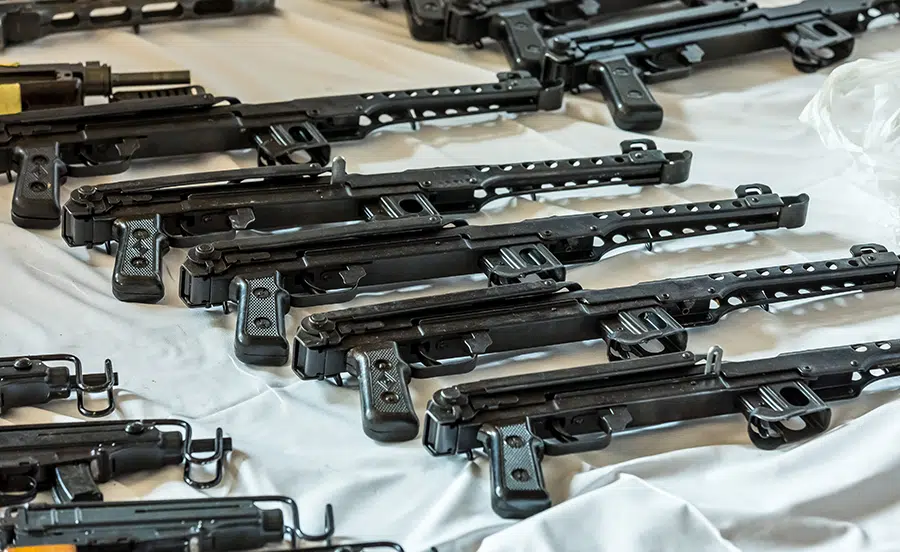
Vincenzo Musacchio: Very worrying. The increase in arms trafficking from Ukraine is obvious to everyone. A look at the number of arms seizures between 2015 and 2024 is proof enough: an unprecedented increase in the history of world crime. Many weapons cross the Polish border into Ukraine, where they are sorted and distributed to the front lines. However, once they cross the border, many weapons are lost and smuggling naturally flourishes. In 2024, Europol seized a ZU-23-2 anti-aircraft machine gun that was offered for sale for around $8,000, while in August 2024, a group of arms dealers was arrested in Lviv with an arsenal of one hundred pistols, twenty assault rifles, thirty grenades and almost fifty thousand rounds of ammunition. This is only a small part of what is actually happening in the European and international arms trade.
Pierluigi Mele: What awaits us in the near future?
Vincenzo Musacchio: An illegal trade, similar to what has already taken place in the Balkans. The wide availability of weapons (including technologically advanced ones such as drones) will, as already mentioned, represent an area that the mafia will exploit, especially in the current difficult economic and social conditions. Ukraine’s national income (GDP) has fallen drastically since the beginning of the war and millions of citizens have left the country. Corruption, which was endemic even before the conflict, is another factor that could contribute to weapons falling into the hands of criminal organizations that see Western aid as an opportunity they do not want to miss. In the near future, we certainly face a significant danger that will affect not only the whole of Europe, but also the rest of the world.
(Editor’s note) About Vincenzo Musacchio: Criminologist, lecturer at RIACS in Newark. He is known for his commitment to the fight against the mafia and his educational work in areas related to the culture of legality. He has taught at various Italian universities and at the Alta Scuola di Formazione della Presidenza del Consiglio dei Ministri (Higher School for the Education of Prime Ministers) in Rome. He currently teaches courses in the United States and teaches members of law enforcement agencies, including the New York Metropolitan Police, strategies for combating transnational organized crime. He is a member of the Rutgers Institute for Anti-Corruption Studies (RIACS) in Newark, USA, and a researcher at the College of Strategic Studies of Organized Crime at the Royal United Services Institute in London. He was a student of Giuliano Vassalli and worked with Antonino Caponnetto; he also corresponded with Giovanni Falcone. His studies focus on the criminology of mafia organizations and international drug trafficking. He is the creator of educational programs such as the “Legalità Bene Comune” (Common Legality) project in schools at all levels. He regularly appears on RAI’s national television programs such as “Presa Diretta”, “Newsroom” and “Report”, as well as in other national and local media, reporting on mafia and criminal cases. He is the author of numerous books and articles on criminal law and criminology. In 2019, in Casal di Principe, the family of a priest murdered by the Camorra awarded him the special distinction of the National Prize Don Giuseppe Diana. On 27 December 2022, the President of the Republic awarded him the title of Cavaliere dell’Ordine al Merito della Repubblica Italiana (Knight of the Order of Merit of the Italian Republic). His work against the mafia earned him death threats, which, however, did not deter him from his anti-mafia activities.