
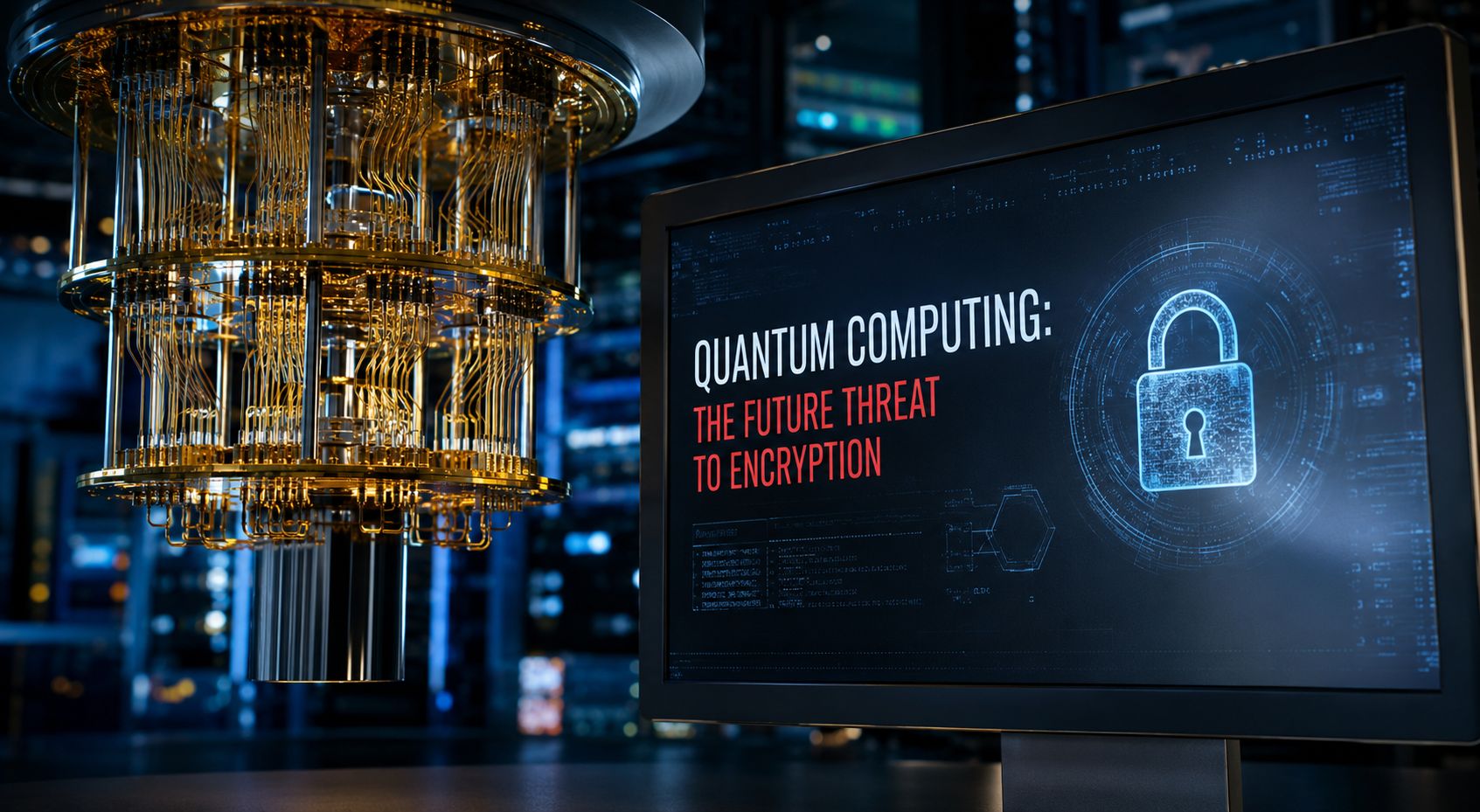
For decades, modern encryption has protected everything from online banking to private emails. Most digital security systems rely on mathematical problems that are practically impossible for traditional computers to solve within a reasonable timeframe. But the rise of quantum computing may eventually change that reality.
Researchers and technology companies are rapidly developing quantum machines capable of processing information in entirely new ways. While fully mature quantum computers are not yet available, cybersecurity experts and governments are already preparing for a future in which current encryption methods may no longer be reliable. In fact, the U.S. National Institute of Standards and Technology (NIST) finalized new post-quantum encryption standards in 2024, signaling that the threat is being taken seriously at the highest levels.
Why Quantum Computers Matter for Cybersecurity
Traditional computers process data using bits that represent either a 0 or a 1. Quantum computers use qubits, which can exist in multiple states simultaneously through principles such as superposition and entanglement. This allows quantum systems to perform certain calculations dramatically faster than conventional machines. That speed becomes a concern for cybersecurity because many encryption systems depend on mathematical complexity. Tasks that would take classical computers thousands of years could potentially become manageable for advanced quantum machines using specialized algorithms such as Shor’s algorithm. If quantum technology reaches that level, many of today’s widely used encryption standards could become vulnerable.
The “Harvest Now, Decrypt Later” Strategy
One of the biggest concerns among cybersecurity experts is not only future attacks, but attacks already happening today. This strategy is often described as “harvest now, decrypt later.” Cybercriminals or hostile organizations can collect encrypted data today and store it for years. Once quantum computers become powerful enough, that archived information could potentially be decrypted retroactively. This creates a serious long-term risk for sensitive information such as financial records, healthcare data, legal documents, confidential business communications, and private emails. Even if the information cannot be read today, it may still become exposed in the future.
Which Accounts Are Most Vulnerable?
Not every online account carries the same level of risk. Accounts tied to money, identity, or personal records are likely to be the most attractive targets. Banking and investment platforms contain financial information that may remain valuable for years. Email accounts are especially important because they often serve as the recovery method for other services. Healthcare systems store highly sensitive records with long-term privacy implications. Tax portals and digital payment accounts are also considered high-value targets.
The stronger your security practices are today, the less exposed you may be if quantum-era threats eventually become reality.
How to Strengthen Your Security Today
Although quantum-resistant encryption is still being implemented across industries, there are several practical steps individuals can take immediately to improve digital security.
Use Longer Passphrases
Password length matters more than many people realize. A long passphrase made from unrelated words is typically far more secure than a short password filled with symbols and numbers. Instead of using short combinations that are difficult to remember, many cybersecurity professionals recommend creating passphrases containing multiple random words and at least 16 characters overall. Longer credentials significantly increase the difficulty of brute-force attacks, even before quantum computing becomes mainstream.
Stop Reusing Passwords
Password reuse remains one of the most common security mistakes. If a single account becomes compromised, attackers often try the same credentials across banking sites, email services, and social platforms. Using unique passwords for every account greatly reduces this risk. Password managers can help generate and store strong credentials securely, making it easier to maintain different passwords without needing to memorize them all.
Move Beyond SMS Authentication
Text-message-based two-factor authentication is no longer considered the strongest protection method. SIM-swapping attacks and other interception techniques have already exposed weaknesses in SMS verification. Authentication apps provide stronger protection, but hardware security keys are currently among the most secure options available for consumers. These physical devices use standards such as FIDO2 and WebAuthn, which help protect against phishing attacks and reduce reliance on passwords entirely.
Governments and Tech Companies Are Already Preparing
Large organizations are not waiting for quantum computers to fully mature before acting. Technology companies, financial institutions, and government agencies are already transitioning toward post-quantum cryptography standards. The migration process is expected to take years because encryption systems are deeply integrated into global infrastructure. Updating banking systems, cloud platforms, enterprise software, and communication networks requires significant planning and testing. That slow transition is one reason cybersecurity experts encourage individuals and businesses to improve their security habits now rather than waiting for a future emergency.
Is Quantum Computing an Immediate Threat?
Experts still disagree on how quickly quantum computers will become powerful enough to break modern encryption at scale. Some predictions estimate decades, while others believe major breakthroughs could happen sooner. What remains clear is that preparation has already begun across the cybersecurity industry. The possibility of future decryption means that sensitive information shared today may still require protection many years from now. Quantum computing has enormous potential to transform medicine, science, logistics, and artificial intelligence. At the same time, it may force the world to rethink how digital privacy and encryption work in the future.
Source:
https://www.theepochtimes.com/bright/quantum-computing-is-coming-for-your-passwords-heres-what-to-do-before-that-happens-6016081
https://www.wired.com/story/q-day-apocalypse-quantum-computers-encryption/
https://www.ntd.com/quantum-computing-is-coming-for-your-passwords-heres-what-to-do-before-that-happens_1143276.html
Image: AI