


Study confirms lab-made hybrid H5N1 strain invades immune cells, replicates in human blood, spreads to the brain, and kills every mammal tested.
Article by Jon Fleetwood
A September Science Advances paper confirms that U.S. and South Korean researchers have engineered a “Frankenstein” chimeric bird flu virus that is said to be 100% fatal in mammals, infect human immune cells, and spread throughout the body—including into the brain.
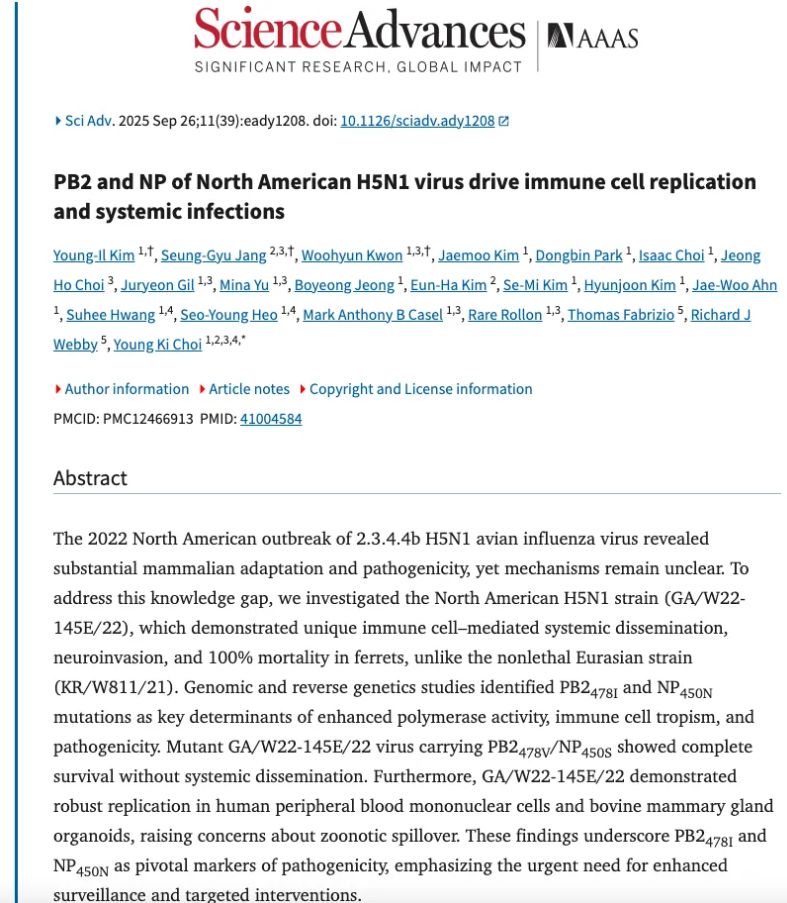
The international team—led by Young Ki Choi of the Korea Virus Research Institute and Richard J. Webby of St. Jude Children’s Research Hospital in Memphis, Tennessee—rebuilt and genetically modified the North American H5N1 avian influenza strain A/Lesser Scaup/Georgia/W22-145E/2022 (GA/W22-145E/22).
The Korean government-funded experiments raise national security concerns, as Congress, the White House, the Department of Energy, the FBI, and the CIA have confirmed that the COVID-19 pandemic was likely the result of lab-engineered pathogen manipulation.
Are governments intentionally or accidentally creating the next pandemic?
A Lab-Made Chimera
The new bird flu virus wasn’t natural.
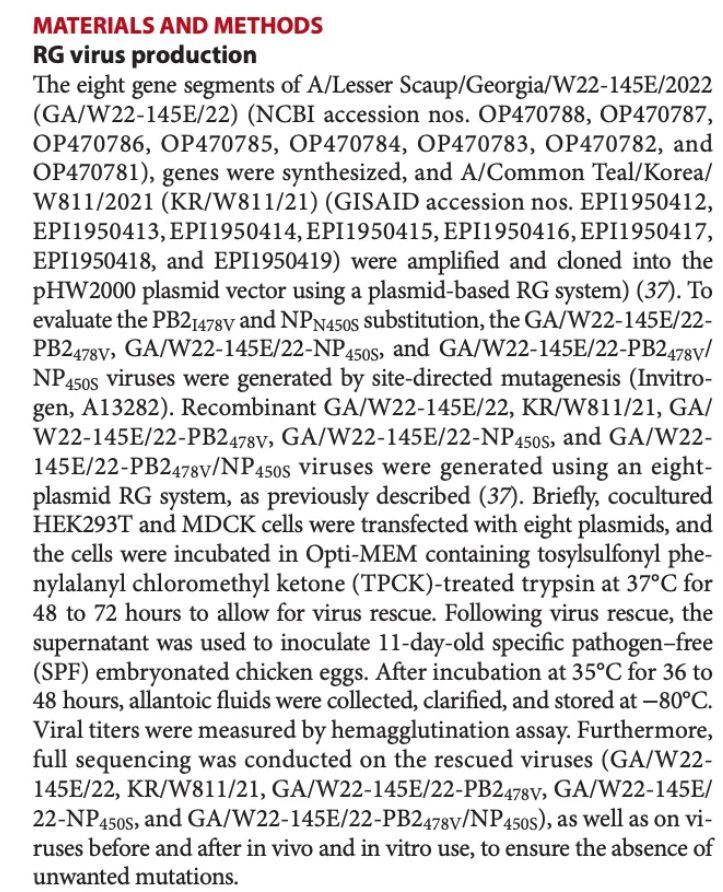
The U.S. and South Korean team used an eight-plasmid reverse-genetics system, a gain-of-function technique that allows scientists to synthesize an entire virus genome from DNA plasmids, assemble it inside human and animal cells, and recover a fully infectious pathogen.
“The eight gene segments of A/Lesser Scaup/Georgia/W22-145E/2022 (GA/W22-145E/22) (NCBI accession nos. OP470788, OP470787, OP470786, OP470785, OP470784, OP470783, OP470782, and OP470781), genes were synthesized, and A/Common Teal/Korea/W811/2021 (KR/W811/21) (GISAID accession nos. EPI1950412, EPI1950413, EPI1950414, EPI1950415, EPI1950416, EPI1950417, EPI1950418, and EPI1950419) were amplified and cloned into the pHW2000 plasmid vector using a plasmid-based RG system),” the authors explained.
“To evaluate the PB2I478V and NPN450S substitution, the GA/W22-145E/22- PB2478V, GA/W22-145E/22-NP450S, and GA/W22-145E/22-PB2478V/ NP450S viruses were generated by site-directed mutagenesis (Invitrogen, A13282). Recombinant GA/W22-145E/22, KR/W811/21, GA/ W22-145E/22-PB2478V, GA/W22-145E/22-NP450S, and GA/W22- 145E/22-PB2478V/NP450S viruses were generated using an eightplasmid RG system, as previously described.”
The paper itself explains that the North American H5N1 lineage is already a reassortant—a genetic mix of Eurasian and North American bird flu viruses:
“The reassortment of EA 2.3.4.4b H5N1 viruses with North American Low Pathogenicity Avian Influenza (LPAI) viruses led to the emergence of previously unidentified genotypes containing PB2, PB1, PA, and NP segments of NAm origin”
In other words, the starting material was a hybrid of two separate influenza families.
This hybrid genome formed the basis for further laboratory engineering.
Researchers then introduced new synthetic mutations to alter the virus’s behavior—creating a true chimera: a recombinant virus stitched together from multiple genetic sources and enhanced in the lab.
The Engineered Mutations & What They Did
The researchers focused on two specific genetic changes—PB2-478I and NP-450N—that together made the virus far more aggressive, able to infect a wider range of cells, and capable of spreading throughout the body instead of staying in the lungs.
These two mutations were placed in the virus deliberately using genetic engineering tools.
They are each said to affect a different part of the virus’s internal machinery:
- PB2-478I is a mutation in the polymerase gene—the enzyme complex the virus uses to copy its RNA. This particular spot (called the cap-binding domain) helps the virus hijack a human cell’s own messages to start manufacturing more virus.
→ In plain terms: this change let the virus steal the host cell’s genetic “on switch” more efficiently, speeding up replication inside any cell it entered. - NP-450N is a mutation in the nucleoprotein, which wraps and protects the viral genome and helps it move in and out of the cell nucleus.
→ This change made the virus better at copying and transporting its genetic material, meaning each infected cell could pump out more viral particles before dying.
When both mutations were present together, the results were extreme.
The virus showed what scientists call increased host-cell tropism—meaning it could infect many different kinds of cells and tissues, not just the respiratory tract.
It multiplied inside immune cells (T cells, B cells, macrophages, and monocytes), spread through the bloodstream, crossed into organs, and even invaded the brain.
“PB2-478I and NP-450N function synergistically to enhance polymerase activity, vRNA synthesis, and replication efficiency … across multiple host species,” the authors wrote.
When the same virus was “fixed” by reversing those mutations back to their original, non-aggressive forms (PB2-478V and NP-450S), the difference was striking:
the virus stopped spreading through the body, stayed confined to the lungs, and none of the test animals died.
“Ferrets infected with the double mutant … survived the study period, indicating significantly reduced virulence,” the paper confirmed.
The authors also warned that these two mutations—PB2-478I and NP-450N—are now showing up in the wild.
100% Fatal in Mammals
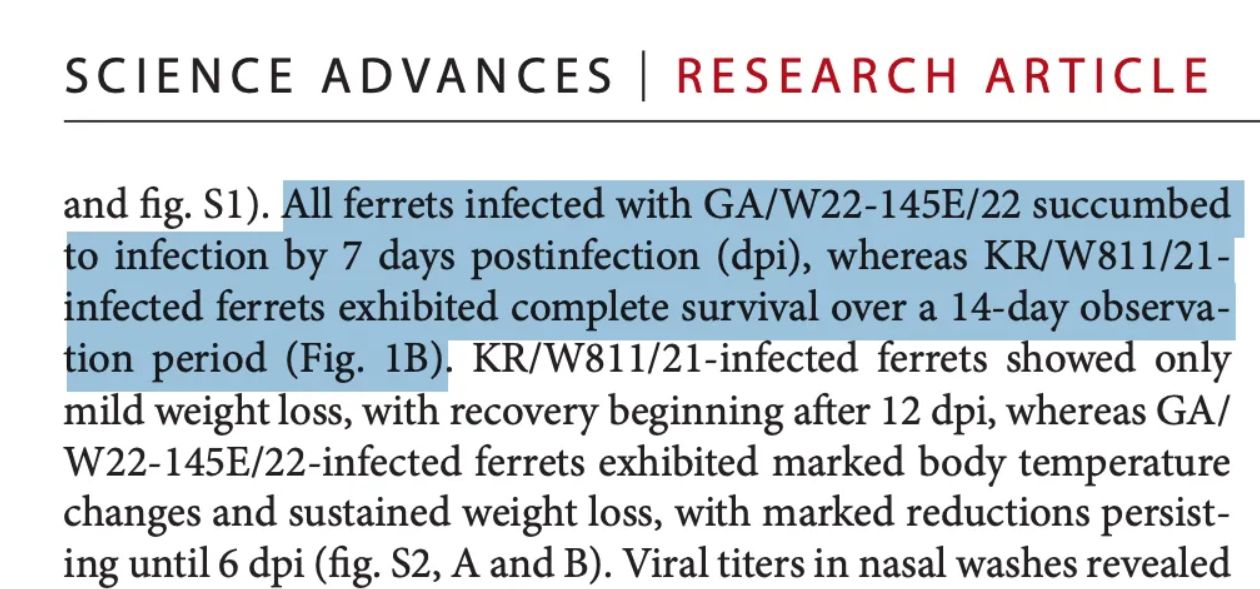
All 24 ferrets infected with the engineered GA/W22-145E/22 strain died within seven days, while those given the Eurasian comparison strain survived the full 14-day study.
“All ferrets infected with GA/W22-145E/22 succumbed to infection by 7 days postinfection,” the study reads.
Post-mortem analysis showed viral replication in nearly every organ—including lungs, liver, spleen, kidneys, intestines, lymph nodes, and brain—with viral RNA reaching deep cortical tissue by day 4.
Infecting Human Blood Cells
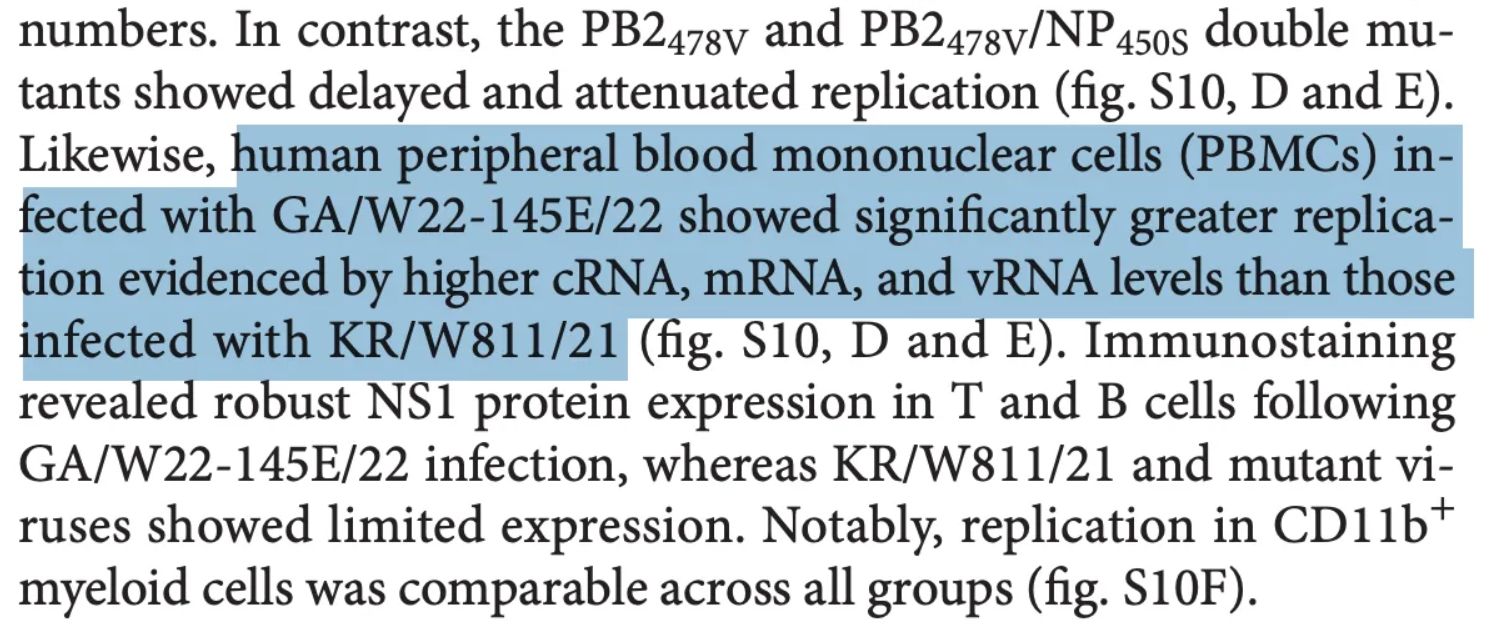
In follow-up tests, the engineered chimera replicated efficiently in human peripheral-blood mononuclear cells (PBMCs) and THP-1 monocytes, proving it could infect human immune cells directly:
“[H]uman peripheral blood mononuclear cells (PBMCs) infected with GA/W22-145E/22 showed significantly greater replication evidenced by higher cRNA, mRNA, and vRNA levels than those infected with KR/W811/21.”
This finding means the virus can use the body’s own immune system to amplify and disseminate—an unusual and hazardous feature for influenza.
Neuroinvasion: Virus Found in the Brain
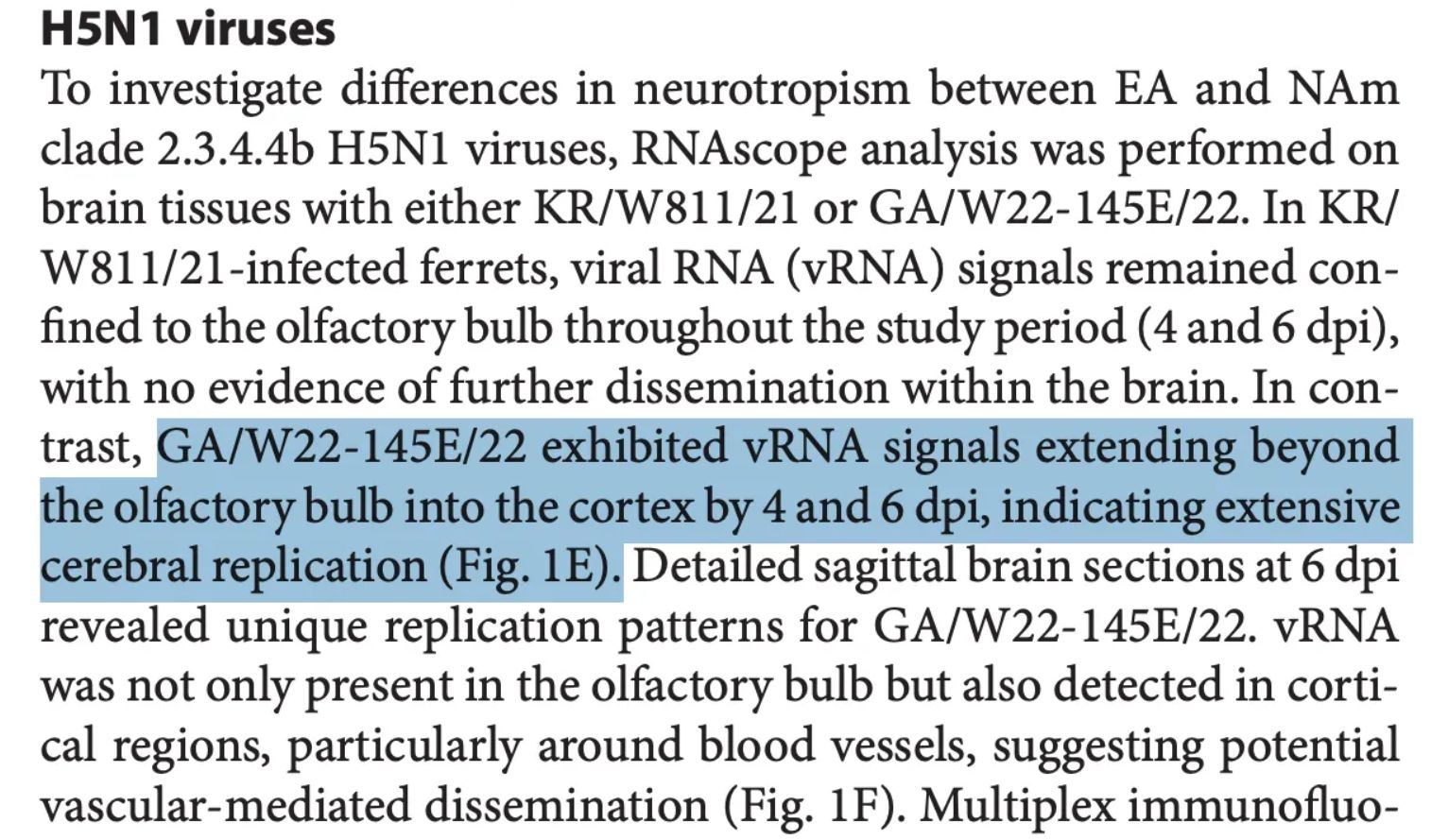
Microscopic imaging revealed viral RNA spreading beyond the olfactory bulb into the cortex, confirming brain infection:
“Viral RNA signals extended beyond the olfactory bulb into the cortex … indicating extensive cerebral replication.”
Immune-cell markers inside brain tissue showed that the virus used infiltrating immune cells as carriers to breach the blood–brain barrier.
A Frankenstein-Style Gain-of-Function Virus
In summary, the project:
- Reconstructed an influenza genome from plasmids,
- Mixed Eurasian and North American gene segments,
- Inserted new mutations that amplified polymerase activity and virulence, and
- Demonstrated human-cell infection, systemic dissemination, and neuroinvasion.
That combination fits the scientific definition of a chimeric gain-of-function virus—a deliberately engineered hybrid designed to exhibit new, more dangerous traits.
Bottom Line
The Science Advances paper documents the deliberate construction of a lab-made chimeric H5N1 “Frankenstein” virus that:
- Killed 100% of mammals tested,
- Infected and replicated in human blood cells,
- Spread systemically through immune cells, and
- Invaded the brain.
The authors themselves conclude that these engineered mutations “drive immune cell–mediated systemic spread, neuroinvasion, and potential vertical transmission.”
In plain terms: this was not natural evolution—it was the intentional creation of a cross-species, human-cell-infecting, mammal-lethal hybrid virus inside a laboratory, presented under the banner of “pandemic preparedness.”
Source & credit: https://jonfleetwood.substack.com/p/us-south-korea-lab-engineer-chimeric