

The Book That Was Meant to Be a Warning
When George Orwell completed his novel 1984 in 1948, he was writing in a fever, dying of tuberculosis on the remote Scottish island of Jura. He was a man who had personally witnessed the Spanish Civil War, who had seen how totalitarian regimes deform reality, rewrite history and crush individual thought. His book was not merely a literary experiment — it was a desperate warning. A warning about a world in which the state sees everything, hears everything, and punishes anyone who dares to think differently. A warning that we apparently failed to understand — or understood all too well and chose deliberately to ignore.
Today, more than seventy years after the novel’s publication, its pages read not as science fiction but as a current journalistic report. Concepts such as mass surveillance, the criminalisation of opinion, state-controlled language and the systematic persecution of dissidents are not ideas from dystopian fiction. They are the everyday reality of modern Britain and an ever-growing portion of the so-called free world. Orwell wrote about Oceania. He might just as well have written about London in 2024.
Big Brother Exists — and His Name Is CCTV, Prevent and the Online Safety Act
In the novel 1984, screens are everywhere. Telecommunication devices that monitor citizens day and night, in public spaces and within the privacy of their homes. Orwell invented this technology as a symbol of total control. Britain introduced it in reality — and went on to boast about it to the world. The United Kingdom is today one of the countries with the highest density of CCTV cameras on the planet. It is estimated that more than six million security cameras operate on British streets, roughly one camera for every eleven inhabitants. London alone ranks among the most heavily surveilled major cities on Earth.
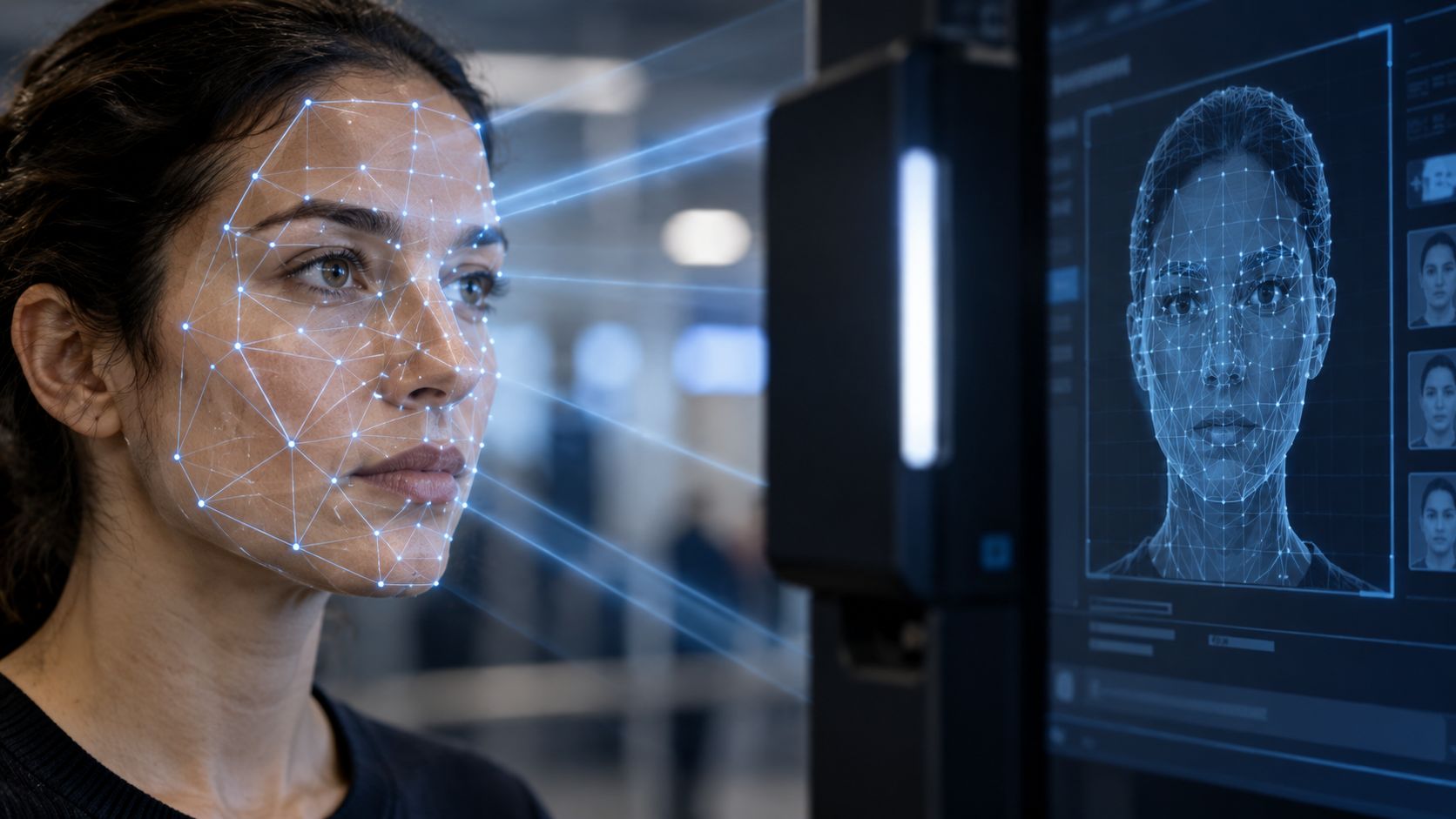
But the cameras are only the beginning. The British government has deployed facial recognition systems in public spaces, used at demonstrations, sporting events and routine police patrols. Technology that identifies a face in a crowd and instantly cross-references it against databases would have brought Orwell’s Thought Police to tears of joy. In the novel, people had to fear informers, children raised to denounce their parents, and telescreen monitors. Today’s Britain has added artificial intelligence, big data and biometric databases to the arsenal.
The Prevent programme, whose stated aim is counter-terrorism, has become an instrument through which teachers, doctors, librarians and social workers are obliged to report to state authorities anyone who displays — in their subjective judgement — signs of radicalisation. The definition of radicalisation is sufficiently vague that it can easily encompass anyone who criticises government policy, takes an interest in certain religious texts, or expresses opposition to British military operations. A voluntary network of civilian informers — precisely what Orwell described as the Junior Spies.
Thoughtcrime Has Become Reality: The Persecution of People for Their Words
One of the most chilling concepts in the novel 1984 is Thoughtcrime. The mere thought of opposing the Party is a crime. It is not enough to comply with the law, not enough to publicly profess loyalty — you must also think correctly, feel correctly, believe correctly. Orwell presented this idea as the pinnacle of totalitarian madness, the ultimate destination of every authoritarian system. And yet today’s Britain pursues it with surprising eagerness.
The British Public Order Act and the Communications Act have become instruments through which people are prosecuted for statements that are not direct threats or incitement to violence, but which authorities have determined to be offensive or alarming. These are remarks made in public, published on social media, sometimes merely muttered to oneself on the street. Thousands of people in Britain face police investigation every year for their words. Hundreds are prosecuted. Dozens are convicted.
The examples are staggering in their absurdity. People have been detained for quietly praying outside abortion clinics. A woman was convicted for holding a blank piece of paper. A man faced criminal prosecution for a Facebook post in which he criticised a police operation. A teenager was questioned for a tweet. These are not stories from China or Russia — they are stories from England, the mother of parliaments, the cradle of the Anglo-Saxon conception of liberty.
Particularly alarming is the Online Safety Act of 2023, which requires technology companies to actively monitor content shared by users and report to state authorities any content deemed harmful. The definition of harmful is deliberately ambiguous — the Act anticipates that regulatory bodies and courts will define it on an ongoing basis. In practice, this means that private technology companies become an extension of state censorship. A miniature Ministry of Truth in every telephone.
The Rewriting of Reality: Media Narrative and the Censorship of Inconvenient Truth
In Orwell’s world there is a Ministry of Truth — a vast building in whose depths thousands of employees work ceaselessly to rewrite historical records, newspapers, books and documents so that they always conform to the current party line. The past is not fixed — it is malleable, adaptable to the needs of the present. What was true yesterday may be a lie today. And vice versa.
The digital age has delivered a far more efficient tool: social media platforms with their algorithms, fact-checkers and content moderation policies. Major technology firms — under pressure from governments, regulators and activist groups — routinely remove content, deplatform users and suppress the spread of information that contradicts the currently approved interpretation of reality. Documents released following the Twitter Files and Facebook Files revelations clearly demonstrated how the American government systematically communicated with technology companies and requested the suppression of specific content from specific users. The British government is no less active in this regard.
What is particularly Orwellian is the speed with which what is acceptable to say publicly changes. Statements that were mainstream and uncontroversial just ten years ago are today labelled dangerous disinformation or hate speech. And conversely — positions that were recently marginal or taboo become official doctrine demanding unconditional loyalty. Anyone who fails to switch their vocabulary and thinking quickly enough risks professional destruction, public shaming and, in extreme cases, legal sanction.
Digitalisation as an Instrument of Control: The End of Privacy
Orwell’s world knew nothing of mobile phones, the internet or social media. And yet he described their essence with frightening accuracy. Telescreens monitored movement, recorded conversations, watched the expressions on people’s faces. The inhabitants of Oceania had no privacy — and they knew it. Therein lies one of the key differences between Orwell’s fiction and our reality: we too have no privacy, but we tell ourselves that we do.
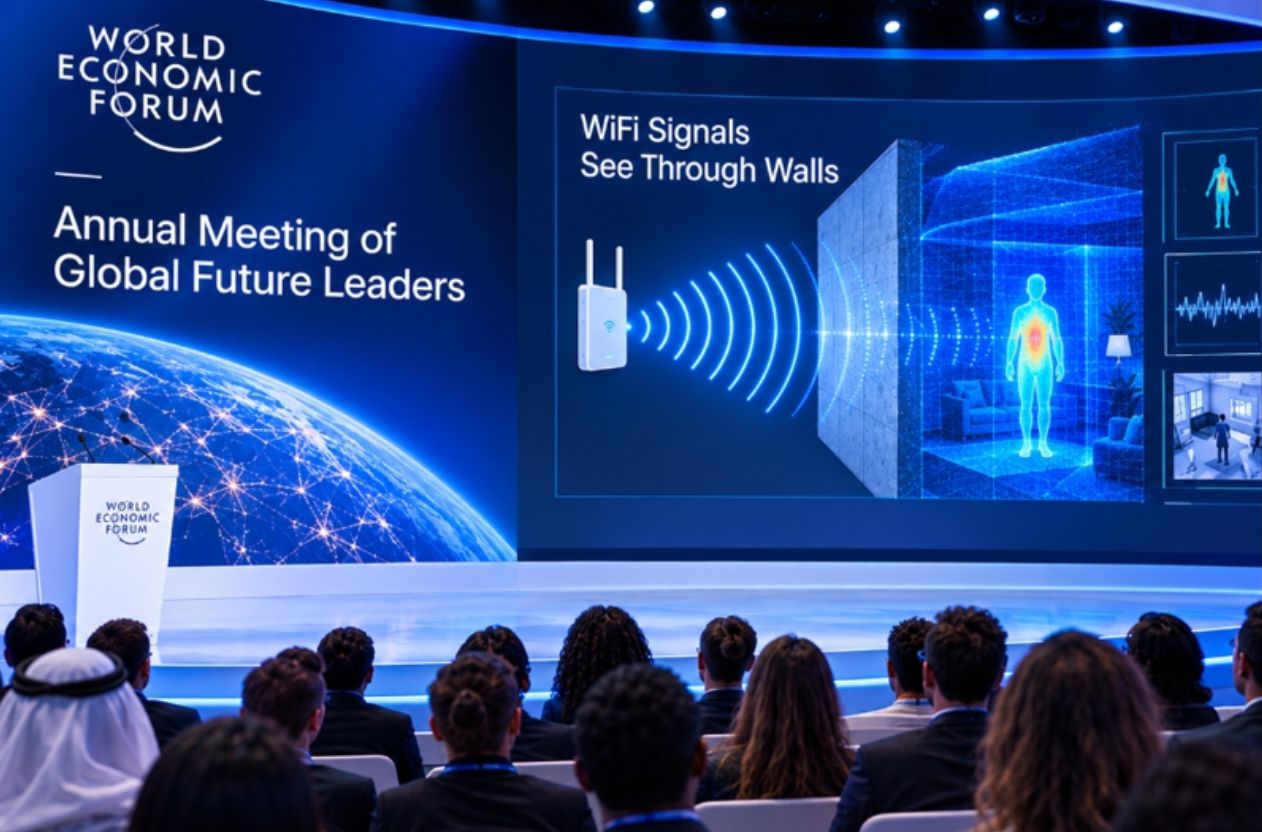
Every modern smartphone is a sophisticated surveillance device that continuously records the location of its bearer, analyses their communications, maps their social networks, logs their shopping habits, political interests, medical queries and intimate conversations. This data is collected, sold, shared and — as leaks of documents and court rulings have demonstrated — provided to intelligence services and government agencies on a scale that would shock even Orwell’s dystopian bureaucrats.
The British government is meanwhile actively working to gain access to the encrypted communications of its citizens. The Online Safety Act contains provisions that would in practice mean the end of end-to-end encryption — the technology that protects the privacy of billions of people around the world. The government argues the necessity of child protection and counter-terrorism. These are precisely the same justifications that totalitarian regimes have always used to legitimise their surveillance. And they are precisely the same justifications that Orwell placed in the mouths of his tyranny-defending characters.
The British programme of mass communications surveillance — revealed through documents provided by Edward Snowden — showed that GCHQ systematically collected the metadata and content of communications from millions of British citizens without individual court orders. The programme, codenamed Tempora, stored all internet communications passing through British undersea cables for a period of thirty days. No suspicion, no court order, no specific target — simply the blanket collection of data on the entire population. Big Brother would be satisfied.
Cancel Culture as the Modern Two Minutes Hate
In the novel 1984, the daily Two Minutes Hate takes place — a ritual gathering during which employees of the Ministry of Truth collectively express their contempt for the current enemy. The purpose is twofold: to reinforce group loyalty and simultaneously to provide an outlet for accumulated frustrations that might otherwise be directed against the Party. Anyone who refused to participate or failed to display sufficient enthusiasm would immediately arouse suspicion.
Social media has delivered the democratisation of the Two Minutes Hate. Every day brings new scandals, new affairs, new individuals designated for public execution. The mechanism is not the Party, but an algorithmically driven mob. The outcome is remarkably similar: an individual is identified, collectively attacked, stripped of their employment, professional reputation and social standing — all at a speed that precludes any meaningful defence or due process. The British government not only tolerates this mechanism but actively exploits it — individuals who express uncomfortable opinions on migration, gender policy or foreign affairs are regularly targeted by coordinated campaigns in which state-funded organisations participate.
Twenty-First Century Newspeak: Language as an Instrument of Thought Control
One of Orwell’s greatest contributions to cultural and political thought is the concept of Newspeak — an artificially simplified language whose purpose is to make independent thought impossible. If a language contains no words for certain concepts, those concepts cannot be thought. If a word is assigned a different meaning from the one it originally carried, the thinking of those who use it changes accordingly.
Today’s political and media language is undergoing an unprecedented transformation that is worthy of Orwell’s pen in both its scope and its deliberateness. Words such as freedom, democracy, safety, harm or hatred are being assigned new, institutionally defined meanings that diverge from their natural understanding. The expression of an opinion becomes the spreading of disinformation. A biological definition becomes a hate speech offence. A threat to state security shifts from terrorists to journalists and activists. Anyone who refuses to adopt the new vocabulary automatically becomes suspect.
British institutions — from the BBC to the National Health Service to police forces — issue internal guidelines on acceptable language whose observance is mandatory for employees. Violations may carry disciplinary consequences. These are not requirements of courtesy or respect, but requirements of ideological conformity enforced by institutional power. Orwell would recognise it instantly.
Who Are the Winston Smiths of Our Time?
The hero of the novel 1984, Winston Smith, is a civil servant who privately records forbidden thoughts in a diary. He knows he is being watched. He knows he is taking a risk. But the need to record that two plus two equals four — that reality is reality regardless of what the Party claims — is stronger than fear. Today’s Winston Smiths are the journalists who report inconvenient facts and are stripped of their press credentials. The scientists who publish independent research findings and are expelled from academic institutions. The doctors who question the consensus and lose their licences. The activists who demonstrate and are identified by camera systems and prosecuted for public order offences.
Julian Assange spent years imprisoned for having published documents proving war crimes. British courts long blocked his extradition to the United States while simultaneously allowing him to be detained for years in the inadequate conditions of an embassy and a prison. Edward Snowden, who exposed the scale of illegal surveillance of their own citizens by British and American intelligence services, lives in exile. They are the truth-tellers of today, punished for refusing to lie.
The Time for Awakening Is Running Short
George Orwell wrote 1984 as a dystopia — as a warning about the direction society might take if it failed to rebel in time. He could not have predicted with what willingness democratic governments would set off in precisely that direction, nor with how little resistance they would be met. He did not foresee that Big Brother would arrive not as a tyrant in uniform, but as a courteous bureaucrat in a suit speaking of child safety, the protection of democracy and the fight against disinformation.
Britain today is a country that surveils its citizens as few democratic states in the world do. It prosecutes them for words. It compels them to ideological conformity under threat of professional destruction. It introduces systems that effectively eliminate privacy as such. And all the while it calls itself free. It says so with such conviction that it has come to believe it itself — and that is perhaps the most Orwellian thing about this entire story.
Orwell wrote: Freedom is the freedom to say that two plus two make four. If that is granted, all else follows. Today in Britain, people face legal sanction for what they say. They face coordinated campaigns for what they write. They face surveillance for what they think. And yet they are expected to applaud the state that does all of this in their name, for their benefit, in the interests of their security.
Orwell’s warning rang out clearly. The question is whether we can still hear it — or whether, by now, we have allowed it to be banned.