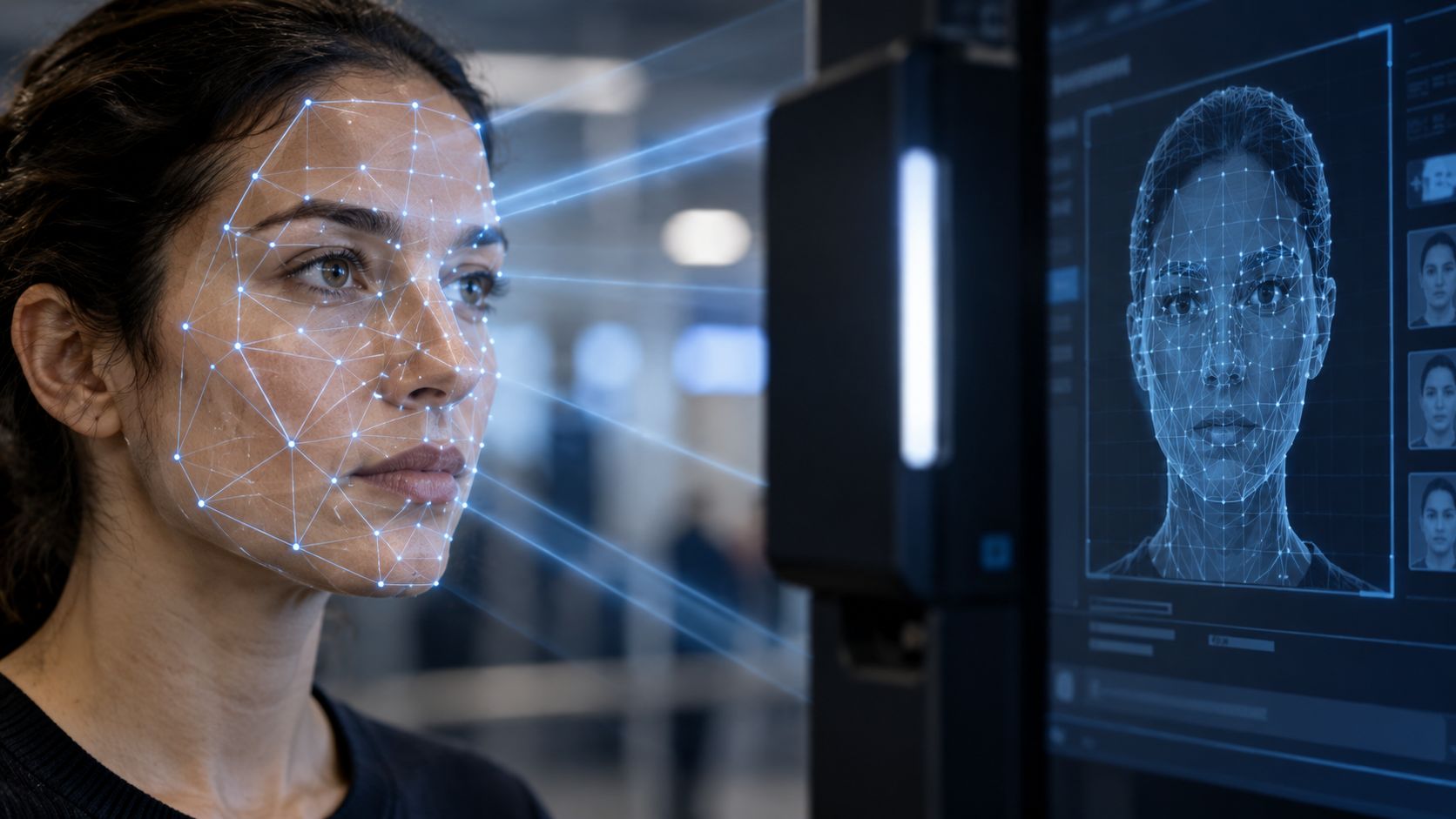


A comment about a movie. The name of a local café. Your city, hobby, or profession. On their own, these details reveal very little. But a new study shows that artificial intelligence can piece them together to create a surprisingly accurate digital fingerprint. Using large language models, researchers were able to link more than half of 987 pseudonymous Hacker News users to their real-world identities. Obvious clues — such as personal websites, social media handles, and GitHub usernames — had been removed beforehand.
The cost of the experiment? Just $2,000, or roughly $1 to $4 per profile.
55% Identified from a Pool of 89,000 Users
The researchers deliberately left in information that might seem harmless: the names of colleagues, institutions and local businesses, places people had lived, their interests, demographic details, and technical skills.
AI then combined these scattered clues and searched for potential matches among 89,000 users. The results were striking: at 90% precision, the system identified 55.2% of the target profiles. Even when the precision threshold was raised to 99%, it still identified 45.1%.
By comparison, an older statistical deanonymization method achieved just 0.1% on the same data.
That is the crucial difference. What once required painstaking detective work can now be automated with AI — and carried out at extremely low cost.
The More You Reveal, the Easier You Are to Find
A separate experiment involving Reddit users showed that even seemingly trivial details, such as movie preferences, can help identify someone. The more a person publishes online, the more distinctive their digital profile becomes.
The principle is simple: your city, profession, attendance at a particular conference, or an unusual hobby can each narrow the pool of possible identities. Put enough of those clues together, and the combination can become a unique fingerprint.
Even the sheer size of a platform offers only limited protection. The researchers estimate that their method could still identify around 45% of target individuals in a pool of one million people — and roughly 27% even in a theoretical pool of 100 million candidates.
A Powerful Surveillance Tool
The implications are significant. Governments could potentially use these techniques to connect pseudonymous accounts belonging to journalists, dissidents, or activists with their real identities. Companies and data brokers could use similar methods to link the same person’s profiles across different platforms.
And none of this requires hacking a database. The study relied entirely on publicly available information that users themselves had posted online.
Even the safety filters built into AI systems may offer limited protection. A deanonymization attempt can be broken into seemingly harmless tasks: summarizing profiles, comparing documents, or evaluating possible matches. And with open-source models, built-in safeguards can potentially be removed altogether.
Digital ID Could Make the Problem Worse
The issue becomes particularly sensitive in the context of digital identity systems and online age verification. Such systems are often presented on the premise that users can prove who they are once while continuing to interact online under a pseudonym. But if AI can already identify people from the content they publish, the boundary between verified identity and pseudonymity becomes increasingly fragile. The study does not show that digital identity credentials automatically expose anonymous accounts. What it does show is how easily scattered online traces can now be combined to reconstruct a real-world identity.
The real danger, then, may not be a massive data breach. It may be the thousands of tiny details people voluntarily reveal over the course of years. Those clues were once scattered across the internet, difficult and expensive to connect. Today, AI can piece them together for a few dollars — until the real name behind the pseudonym comes into view.
Source: https://reclaimthenet.org/the-internets-small-clues-have-become-an-identity-map