
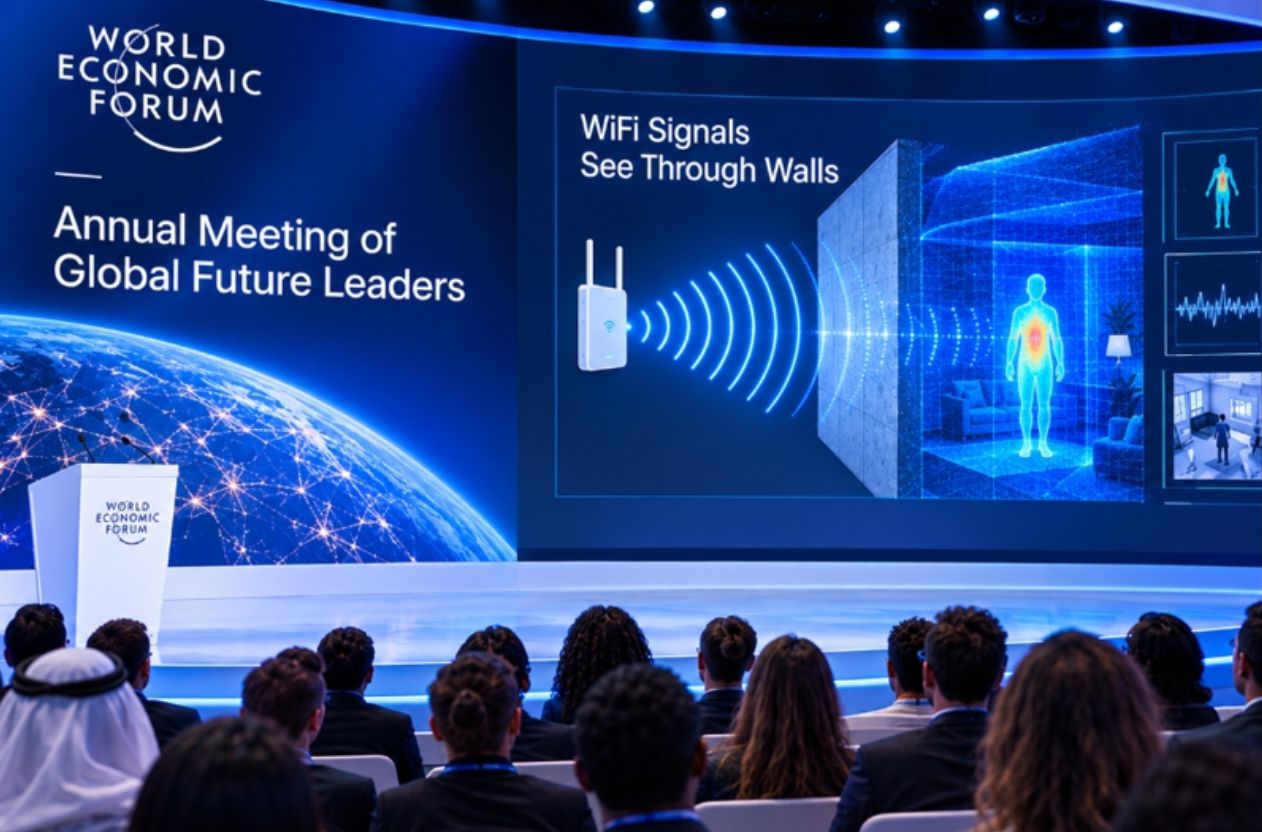
The World Economic Forum is launching a new annual gathering for the next generation of global leaders. A group of “Global Future Leaders” will meet for the first time in Dubai from October 13 to 15, 2026. The agenda will cover artificial intelligence, robotics, geopolitical security, and technologies that are increasingly encroaching on human habitats.
The @wef’s inaugural Annual Meeting of Global Future Leaders will take place from the 13-15 October in #Dubai.
In collaboration with the Government of the United Arab Emirates, this new next‑generation leadership platform brings together emerging leaders under 40 and senior global leaders to discuss what’s needed to shape the decade ahead.
Find out more about #AMGFL26 here: https://t.co/dJtqpu9OwK
@UAEmediaoffice
— World Economic Forum (@wef) October 5, 2026
Citing the World Economic Forum’s agenda, *The Sociable* reports that the upcoming gathering will bring together young leaders under the age of 40 with established figures from the fields of politics, business, science, and technology.
Detecting people through walls
Of particular note is the announced presentation by MIT researcher and WEF Young Global Leader Fadel Adib.
Adib works on wireless technologies that utilize radio or Wi-Fi signals to gather information about people and objects, even when they are not directly visible. Among other things, *The Sociable* highlights his research into detecting and tracking human movement through walls, reconstructing human poses, and capturing physiological signals.
The technology leverages the fact that radio signals can penetrate walls and be reflected by the human body. Algorithms analyze these reflections and can reconstruct movements or other information from them.
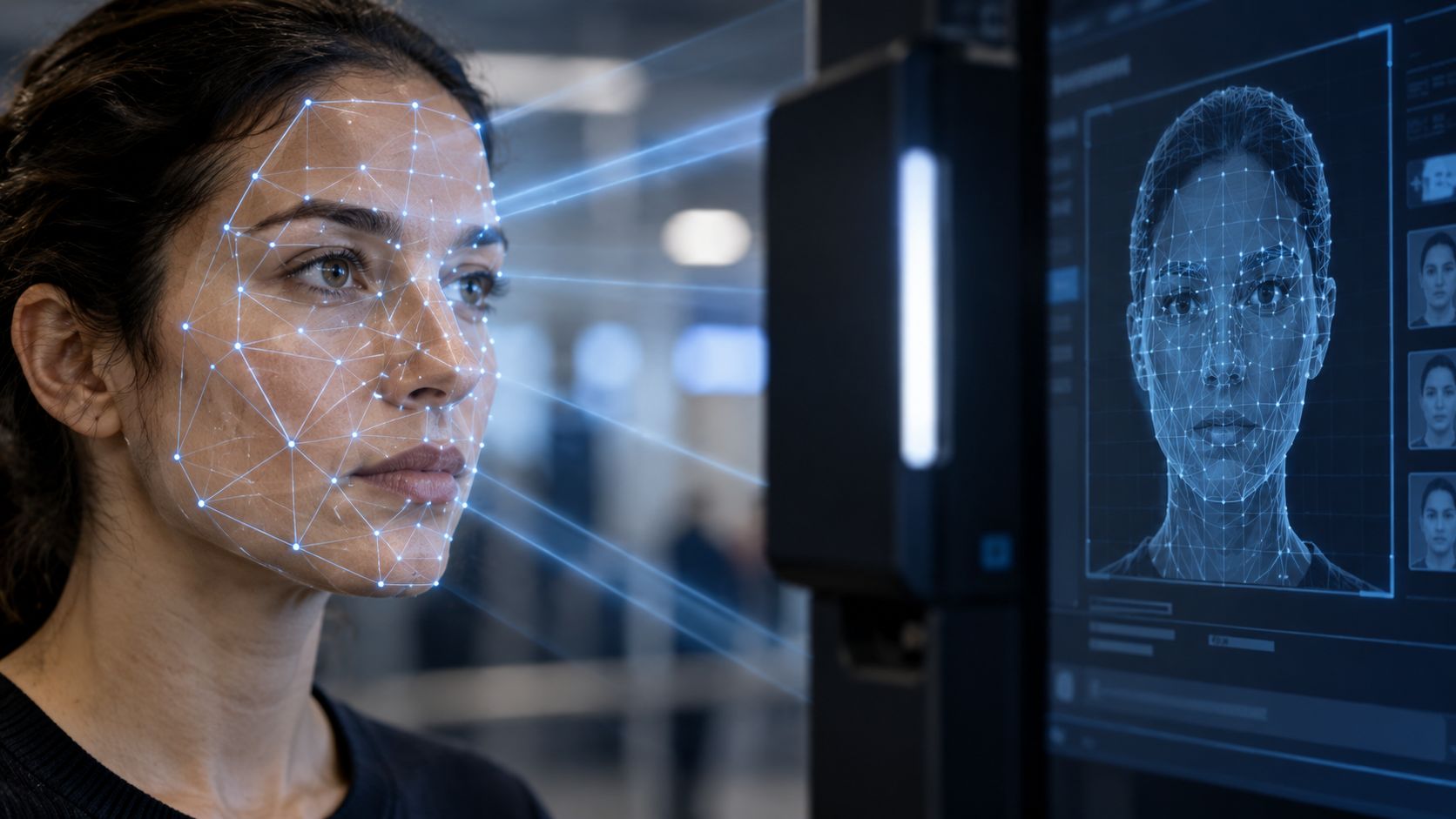
What might have originally been of interest for medical applications, rescue operations, or support for the elderly inevitably has another dimension: technology capable of detecting people without cameras or direct visual contact raises serious questions regarding privacy and surveillance.
Where does the human end and the machine begin?
The next item on the agenda is titled “The Human-Machine Interface.”
Behind this research is robotics researcher Madeline Gannon, who studies the interaction between humans and machines. *The Sociable* notes that Gannon previously spoke at a WEF meeting in China about how the social acceptance of robots depends not only on what the machines can do but also on how people emotionally perceive and interact with them.
The debate has long since moved beyond the realm of traditional industrial robots. It concerns machines that are increasingly integrating into human workspaces and living environments—and the question of how to lead people to accept this presence as a matter of course.
Artificial Intelligence and “Human Action”
The World Economic Forum (WEF) has identified six key thematic areas for the meeting. These include artificial intelligence and human action, science and innovation, economic growth, geopolitics and security, leadership and the economy, and climate and nature.
The phrase “AI and human action”—that is, artificial intelligence and human behavior—is particularly noteworthy. This boundary is becoming crucial as the automation of societal decisions increases: Who ultimately decides—a human, an institution, or an algorithm?
The WEF aims to explore possible futures.
Furthermore, there are so-called “unknown tomorrows.” Participants are encouraged to explore potential future scenarios and examine developments whose impact cannot yet be fully foreseen.
In addition, “Opportunity Labs” are planned, where participants will collaborate on solutions.
This gathering is, therefore, more than just another conference on new technologies. It brings together the very people destined to hold future leadership positions in politics, business, science, and technology—and confronts them with the technologies and societal models that could shape our future.
A new generation for the technological world
The WEF refers to them as “Global Future Leaders.” However, the topics reveal what these future leaders are preparing for: artificial intelligence acting as a decision-maker in society, robots in everyday life, new forms of human-machine interaction, and sensors capable of detecting people even through walls.
None of these technologies are inherently tools for surveillance or control. Many have legitimate medical, industrial, or security applications.
But these same capabilities can also be used in other ways. That is precisely why it is crucial to determine who controls these technologies, what limits are set, and whether the public has any say in the matter at all.
Although these issues are rarely discussed in society, the World Economic Forum in Dubai is already bringing together a generation that could play a role in their political and economic implementation.
Source: https://sociable.co/government-and-policy/wef-inaugurate-annual-meeting-global-future-leaders-dubai/