
Millions of Australians handed their photo to a roads authority so they could be allowed to drive. They did not hand it over to become a permanent entry in a national biometric register. That is what is happening, and it is happening quietly.
A licence photo is no longer just a licence photo
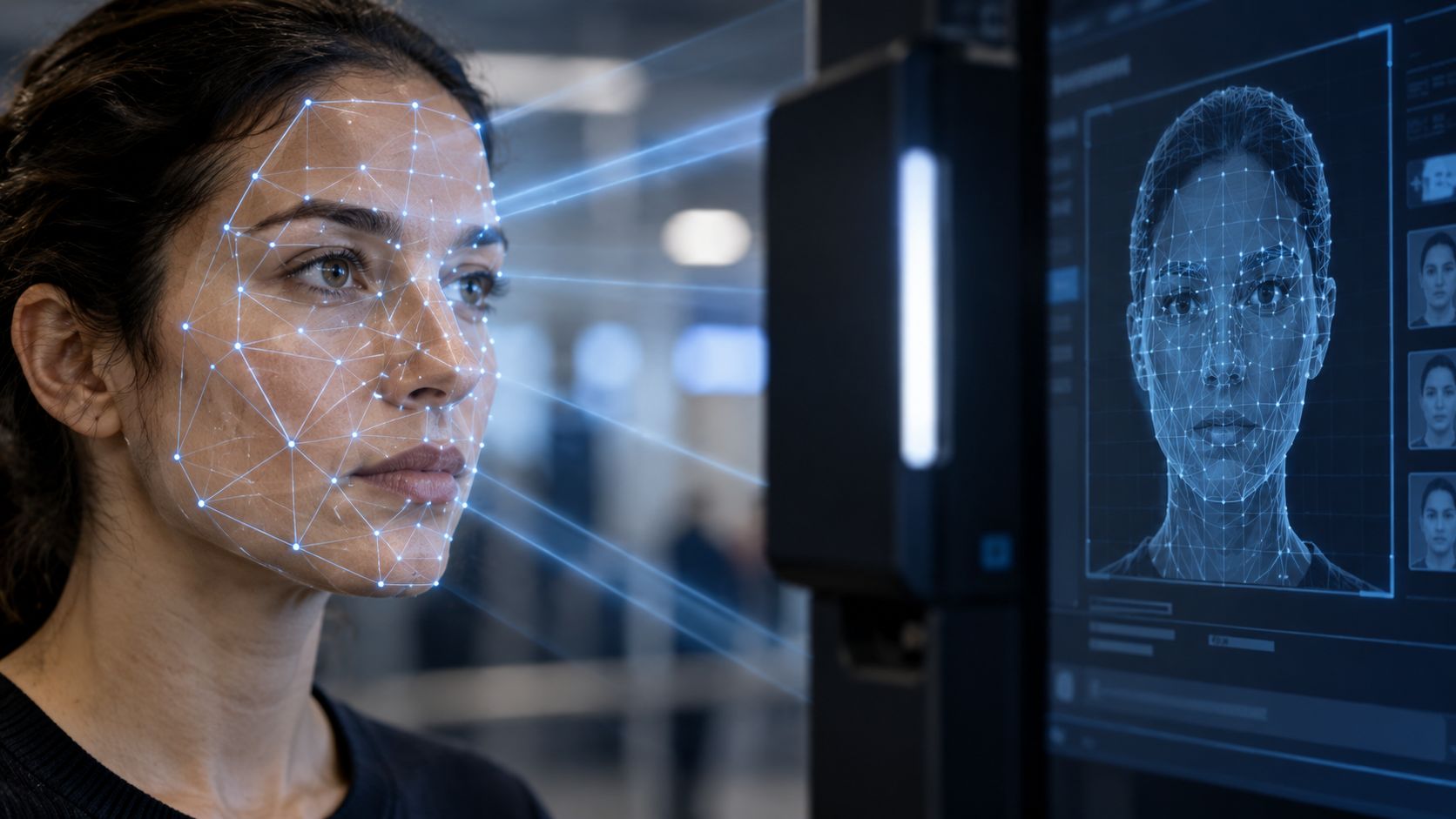
The National Driver Licence Facial Recognition Solution, known as the NDLFRS, takes images from state and territory driver licences and turns them into biometric templates stored centrally. According to the government’s own architecture documentation, the system is hosted by the Department of Home Affairs and sits inside the wider Identity Matching Services initiative. The difference between an ordinary photograph and a biometric template is the whole point. A photo sits on a plastic card, while a template is a mathematical map of your face that machines can search, match and compare at scale.
The idea is not new. In 2017, federal, state and territory leaders agreed to build a shared facial recognition database, with the then prime minister insisting that nothing was being accessed that was not already available. That reassurance, that this is merely tidier bookkeeping, has been repeated ever since. It misses the difference between a photo that exists in one office and a searchable biometric record that can be queried across the country.
Consent was an afterthought
The most damning episode in this saga came from Tasmania. After uploading its licence images to the system, the state asked for them to be removed, saying they had been uploaded without the consent of licence holders and that no participation agreement had been signed with the federal government. In other words, a jurisdiction’s own citizens’ faces were reportedly in a national biometric system before the paperwork was done. The images then had to be pulled out and the agreements renegotiated.
The same disorder shows in how people are told to protect themselves. One publication reported that individuals could opt out by contacting their state road authority. South Australia’s official page states flatly that licence holders are included automatically and cannot opt out. When the government’s own channels cannot agree on whether you have a choice, you do not have one in any meaningful sense.
Years of delay, then a rush
For nearly a decade the project stumbled. A Home Affairs bill in 2018 to build the interoperability hub drew fierce criticism, and the system was repeatedly described as long-delayed. The NDLFRS finally went live in October 2025, with Western Australia and South Australia connected. Fujitsu was contracted to run it until mid-2026, with the facial matching technology originally supplied in part by Cognitec.
Now New South Wales is next. A bill tabled on 6 August 2026 would route the state’s licence and photo card images into the federal system, and it does so as part of an omnibus organised-crime bill, not as a standalone measure open to proper debate. Critics note that no real public consultation took place. Sweeping biometric legislation tucked into a crime package is not how a government behaves when it is confident the public will agree.
The promises and why they ring hollow
The government says the service will be used for one-to-one verification, comparing your selfie with your own licence photo, and only with consent. But the system is described as capable of matching a single image against all others. Officials say it will not be used that way. A promise about how a capability will not be used is only as strong as the law that binds it, and in this country privacy law remains weak. One opposition figure put it bluntly, saying the system should not be rolled out until privacy laws are fit for purpose, because facial data is among the most personal information there is and nobody can be confident it is protected from loss, misuse or hacking.
That last point matters in a country that has already lived through catastrophic data breaches. A stolen password can be changed, but a stolen face cannot. Every additional jurisdiction that feeds images into a central store makes that store a more attractive target, and the consequences of failure fall on citizens who were never asked.
Function creep is not a risk, it is the plan
The stated purposes are already broad: identity theft, crime prevention, road safety and identity verification. Access is currently limited to approved government agencies, but the government has openly said that access could extend to state agencies and selected private organisations. Once a national face database exists and the political appetite for using it grows, each extension will be justified by the last. Biometric systems almost never shrink.
What Australians should demand
Australians are entitled to a clear and honest answer to a simple question: did anyone ask you? Before more states are folded in, there should be strong, enforceable privacy legislation, real consultation, an unambiguous right to opt out, hard statutory limits on one-to-many searching and private-sector access, and independent oversight with teeth. Until then, the national face database remains what it has been from the start, a system built first and justified afterwards.
Sources:
service.sa.gov.au/privacy/national-driver-licence-facial-recognition-solution
biometricupdate.com/202608/australias-national-face-matching-system-expands-with-nsw-participation
architecture.digital.gov.au/national-driver-licence-facial-recognition-solution-ndlfrs
cyberdaily.au/government/12778-australian-gov-to-launch-long-delayed-license-and-photo-recognition-platform
whichcar.com.au/news/major-change-facial-recognition-system-drivers-licences
reclaimthenet.org/australia-facial-recognition-network-ndlfrs-privacy-concerns
itwire.com/government-tech-policy/australian-govts-agree-on-national-facial-recognition-database
sydneycriminallawyers.com.au/?p=71997