

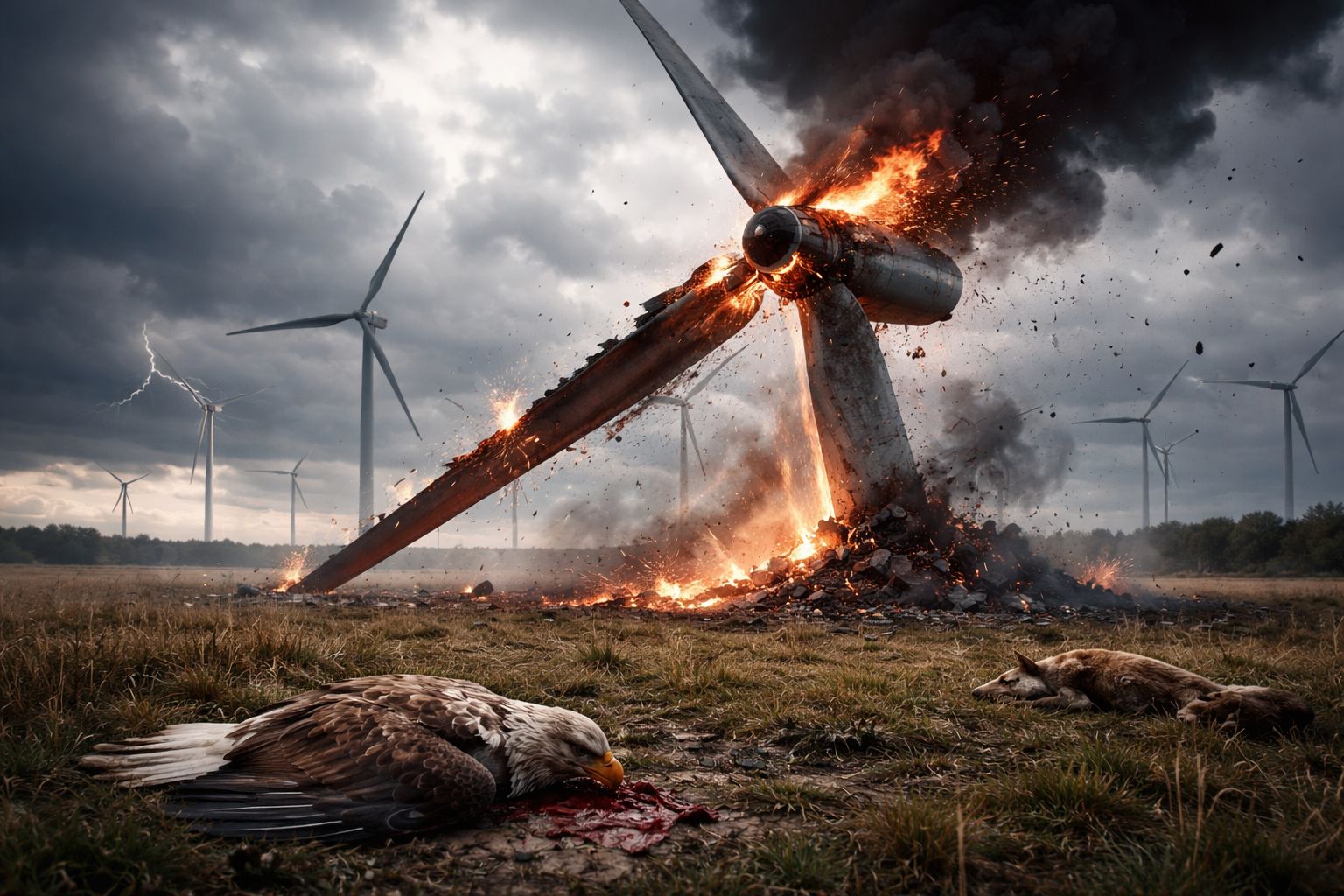
Wind energy is sold to the public as clean, free, and essential for the future. But behind the glossy brochures and political promises lies a far more complicated reality — one of ecological destruction, economic manipulation, landscape disfigurement, and a subsidy-dependent industry that would collapse overnight without taxpayer support. This article examines the full spectrum of threats that wind turbines represent, from the soil beneath their foundations to the birds caught in their blades.
The Green Myth: How Wind Energy Became Sacred
Few technologies in modern history have been so thoroughly insulated from criticism as wind energy. Questioning wind turbines in polite company is treated much like questioning recycling or organic food — a signal of bad faith, ignorance, or worse, complicity with fossil fuel interests. This cultural shield has allowed an entire industry to grow in the shadow of ideological protection, shielded from the kind of rigorous cost-benefit scrutiny we would apply to any other large-scale infrastructure project.
Yet the facts, when examined honestly, reveal a technology that is simultaneously less effective, more destructive, and far more expensive than its proponents admit. Wind turbines are not a neutral addition to the landscape. They are massive industrial machines — some standing over 250 meters tall with blade spans exceeding 150 meters — that alter ecosystems, damage communities, extract billions in public subsidies, and deliver electricity only when the wind decides to blow. The time has come to take a serious, unflinching look at what wind energy actually costs.
Soil Degradation and the Drying of the Land
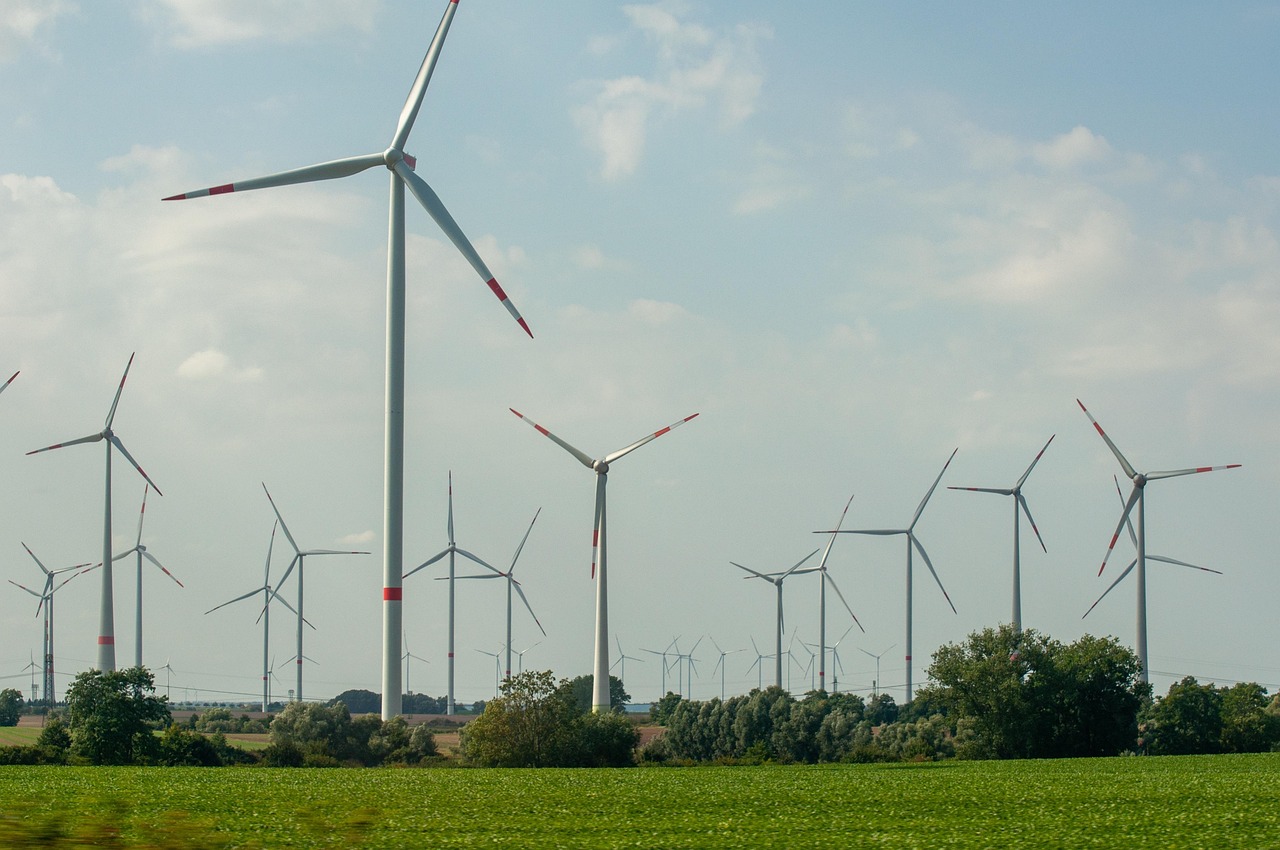
One of the least discussed consequences of large wind installations is their effect on local soil and microclimate. Wind turbines do not simply harvest energy that was otherwise passing harmlessly through the air. They extract kinetic energy from the atmosphere, and that extraction has measurable consequences for the air movement near the ground.
Studies conducted in Texas and other wind-heavy regions have found that large wind farms raise nighttime surface temperatures and alter humidity patterns in surrounding areas. By drawing warmer air downward through turbulent mixing near the surface, turbines can disrupt the natural temperature inversion that normally keeps ground moisture stable overnight. The result, over time, is accelerated surface evaporation and a measurable drying effect on the surrounding soil. For agricultural land adjacent to large wind installations, this is not an abstract concern — it translates directly into reduced crop yields, altered irrigation needs, and changed growing conditions that farmers did not sign up for.
Beyond microclimate effects, the physical construction of wind farms involves significant land disturbance. Access roads must be built to each turbine — often through previously undisturbed fields, wetlands, or forests. These roads compact soil, fragment ecosystems, and create permanent channels for water runoff and erosion. The concrete foundations required for modern turbines are enormous structures, often extending several meters into the ground and disrupting both the water table and the soil composition around them. Once a wind farm is built, the land is never quite the same again.
Vibrations, Infrasound, and the Invisible Threat to Human Health
One of the most contentious and poorly understood aspects of wind turbine impacts is the effect of low-frequency noise and infrasound on human health. Wind turbines generate not only audible noise — a persistent swooshing and mechanical hum — but also infrasound, which consists of pressure waves below the threshold of human hearing, typically below 20 Hz.
Infrasound is not perceived consciously, but it is physically felt by the body. The inner ear contains structures sensitive to very low-frequency pressure variations, and prolonged exposure to infrasound sources has been associated in numerous case studies with a range of symptoms collectively described as Wind Turbine Syndrome: sleep disturbance, headaches, tinnitus, dizziness, heart palpitations, difficulty concentrating, and a persistent sense of unease or anxiety. Residents living within two kilometers of large turbines frequently report these symptoms, and many have been forced to abandon their homes entirely.
The wind industry and many government health bodies have been quick to dismiss these concerns, often citing the lack of large-scale randomized controlled trials as proof that the effects do not exist. But the absence of industry-funded large-scale studies is hardly the same as evidence of safety. The precautionary principle, so enthusiastically applied in other areas of environmental policy, is conspicuously absent when it comes to protecting rural residents from the turbines installed in their backyards.
Structural vibrations transmitted through the ground add yet another dimension to this problem. The mechanical forces generated by turbine operation travel through the foundations and into the ground, potentially affecting building structures, wells, and underground infrastructure over distances that are not yet fully characterized. In areas with certain geological conditions, these vibrations can accumulate and cause long-term damage to nearby structures — damage that is difficult to attribute legally and nearly impossible to remedy once a turbine is operating.
Death from Above: Wind Turbines and Bird and Bat Mortality
Perhaps nothing exposes the selective environmentalism of wind energy advocates more sharply than the industry’s relationship with bird and bat mortality. Environmental regulations that would shut down any other industrial project for killing a handful of protected birds are routinely waived, weakened, or quietly ignored when it comes to wind turbines.
Estimates of annual bird deaths caused by wind turbines in the United States alone range from 140,000 to over 500,000 birds per year, with some researchers placing the figure even higher. Among the casualties are eagles, hawks, falcons, and other raptors that are strictly protected under federal law. The American bald eagle — a national symbol — is killed by turbines on a regular basis, and operators have received special permits allowing them to “incidentally take” (a bureaucratic euphemism for kill) eagles for periods of up to thirty years.
Bats fare even worse. Bat mortality at wind farms is a catastrophic and poorly publicized problem. Unlike birds, which are often killed by direct blade strikes, bats frequently die from barotrauma — a condition where the sudden pressure change near a spinning blade ruptures blood vessels in their lungs. Bats are not even required to touch the blade to die. Estimates suggest that wind turbines kill between 600,000 and 900,000 bats annually in the United States, and potentially far more. Given that a single bat can consume thousands of insects per night, this represents an enormous and largely invisible blow to agricultural pest control and ecosystem function.
The irony is profound: an industry that claims to protect the environment from climate change is granted systematic legal exemptions to kill the very species that environmental law was designed to protect. If an oil refinery or a coal plant produced these mortality numbers, it would be front-page news and the subject of immediate regulatory action. Wind farms produce them quietly, year after year, with barely a murmur from the environmental lobby.
Landscape Destruction and the Industrialization of Rural Space
There is an aesthetic and cultural dimension to wind turbine opposition that is frequently dismissed as mere NIMBYism — a selfish preference for unobstructed views over the collective good. This dismissal is both condescending and intellectually dishonest. The transformation of rural landscapes by wind installations is not a trivial cosmetic concern. It is a fundamental change to the character, identity, and use of land that has often been shaped by human communities over centuries.
Modern wind turbines are not the picturesque windmills of the Dutch countryside. They are industrial machines of staggering scale, visible for tens of kilometers in every direction, flashing warning lights through the night, and fundamentally altering the visual character of the horizon. Upland moors, coastal headlands, forested ridges, and agricultural valleys that have defined the character of entire regions are being permanently industrialized by wind installations that serve the energy needs of distant cities while imposing their full costs on local communities.
Tourism, one of the primary economic activities of many rural areas, is directly and measurably harmed by wind farm development. Studies have consistently shown that property values fall in areas surrounding wind developments — sometimes by 10 to 20 percent within visual range of turbines. Walkers, cyclists, and visitors who come to rural areas specifically for their natural character do not tend to regard wind turbines as an attractive feature of the landscape. The economic losses to local tourism businesses, hospitality providers, and property owners are real, sustained, and rarely compensated.
Perhaps most damagingly, wind farm development frequently targets exactly the places with the highest ecological and landscape value — upland areas with strong and consistent winds that are often also designated wildlife habitats, areas of outstanding natural beauty, or sites of cultural significance. The calculus applied by developers is simple: the windiest places are the most profitable, and the political resistance from sparsely populated rural communities is more manageable than urban opposition. The result is a systematic assault on the most valued and least replaceable landscapes in the name of an energy transition that benefits shareholders and politicians far more than it benefits the environment.
The Construction Nightmare: Roads, Concrete, and Carbon Debt
Wind energy is routinely described as “zero-emission” or “carbon-neutral,” a claim that depends entirely on ignoring the enormous carbon cost of building the machines in the first place. A modern offshore wind turbine requires hundreds of tonnes of steel, thousands of tonnes of concrete, and significant quantities of rare earth elements, all of which must be mined, processed, transported, and assembled using energy that is, in most cases, derived from fossil fuels.
The carbon debt of wind turbine construction — the amount of CO₂ emitted in building the machine that the turbine must “repay” through clean electricity generation — is frequently cited as being recoverable within six months to a year of operation. But these calculations typically exclude the infrastructure costs: the access roads, the grid connection cables, the substations, the concrete foundations, and the ongoing maintenance operations that involve diesel-powered vehicles and equipment throughout the turbine’s operational life.
Offshore wind, which is increasingly favored because it avoids the most visible landscape impacts, carries an even heavier construction burden. Installation vessels are among the most fuel-hungry maritime machines ever built. Laying submarine cables across tens or hundreds of kilometers of seabed requires enormous energy inputs. The steel and concrete used in offshore foundations must withstand constant saltwater corrosion, requiring more material per turbine than onshore equivalents and necessitating regular inspection and maintenance at considerable expense.
The blades themselves present a particular problem that the industry has largely refused to confront publicly. Wind turbine blades are made of fiberglass composite materials that cannot currently be recycled economically. When turbines reach the end of their operational life — typically around 20 to 25 years — the blades must be cut up and buried in landfill. Thousands of these blades are already accumulating in dedicated blade cemeteries in the United States and Europe, a slow-growing monument to the incomplete thinking behind the renewable transition. The scale of this problem will only increase as the first generation of large turbines reaches retirement age in the coming decade.
Intermittency: The Fatal Flaw That Cannot Be Engineered Away
The single most fundamental problem with wind energy is also the simplest: the wind does not blow all the time, and it does not blow on demand. Modern electricity grids must maintain supply and demand in precise balance at every instant — a technical challenge of considerable complexity that wind energy makes dramatically harder, not easier.
When the wind blows strongly across a large wind fleet, the grid can be flooded with electricity that it cannot use, driving prices negative and forcing conventional generators to pay to dispose of their output. When the wind drops — as it does, sometimes for days at a time, often during periods of high energy demand in cold or hot weather — the wind fleet delivers nothing, and something else must fill the gap. That something else, in the current state of technology, is almost invariably a gas-fired power station kept warm and ready to respond at short notice.
The relationship between wind energy and gas backup is one of the dirty secrets of the energy transition. For every gigawatt of wind capacity installed, a roughly equivalent capacity of flexible, fast-responding gas generation must be maintained on standby. This backup capacity must be paid for whether or not it runs — its capital costs, its maintenance costs, its staffing costs all accrue regardless of how many hours it operates. The result is a dual cost structure in which consumers pay both for the wind turbines and for the backup that makes them viable, a duplication that adds substantially to the true cost of wind electricity.
Battery storage, the technology routinely cited as the solution to intermittency, remains nowhere near capable of bridging the gaps created by multi-day wind droughts across entire countries or continents. The storage capacity required to supply even one day of national electricity demand in a large European country would require a quantity of batteries that would take decades to manufacture at current rates of production, consuming vast amounts of lithium, cobalt, nickel, and other materials with their own significant environmental footprints. The storage solution exists in theory and in press releases; in practice, it remains a distant aspiration.
The Subsidy Machine: Wind Energy’s Economic Reality
Perhaps the most important question to ask about any technology is whether it can survive without artificial support. Wind energy’s answer to that question is, after more than three decades of development and deployment, still clearly no. The wind industry is, at its core, a subsidy-harvesting enterprise that has been extraordinarily successful at extracting public money while presenting itself as a market-driven solution to climate change.
The mechanisms of subsidy are varied and not always transparent. Feed-in tariffs guarantee wind operators a fixed price for their electricity, typically well above market rates, with the difference paid by electricity consumers through their bills. Renewable obligation certificates and similar instruments in various countries require conventional generators and retailers to purchase wind-generated electricity at above-market prices, again passing costs to consumers. Capacity market payments compensate wind operators for the capacity value their plants theoretically provide, despite the intermittency that makes this value deeply questionable. Tax incentives, accelerated depreciation rules, and planning advantages add further layers of hidden subsidy that do not appear in the headline electricity price but are real costs borne by taxpayers and consumers.
When these subsidies are totaled and allocated across the actual electricity produced, the true cost of wind electricity — particularly offshore wind — consistently exceeds the cost of generation from modern combined-cycle gas plants, nuclear plants, or even some forms of solar energy. The industry periodically publishes Levelized Cost of Energy figures suggesting that wind has reached “grid parity” with conventional generation, but these figures routinely exclude the system integration costs — the backup capacity, the grid reinforcement, the balancing services — that wind’s intermittency imposes on the wider electricity system. Include those costs, as an honest accounting must, and the economics of wind look far less flattering.
The financial structure of wind projects is designed from the outset to maximize subsidy capture and minimize developer risk. Long-term power purchase agreements, often backed by government guarantees, provide developers with secure revenue streams that allow them to attract institutional investment regardless of the underlying commercial viability of the technology. The risk — of low wind speeds, of grid curtailment, of market price fluctuations — is systematically transferred to consumers and taxpayers, while the profits from subsidy-guaranteed revenues flow to the shareholders of energy companies, infrastructure funds, and, not infrequently, overseas sovereign wealth funds and pension funds with no particular connection to the communities hosting the turbines.
Communities Sacrificed: The Human Cost of Wind Development
The geography of wind development follows a consistent and troubling pattern: turbines are built where land is cheap, populations are sparse, and political resistance is weak. The communities that bear the costs of wind development — the noise, the visual intrusion, the health concerns, the property value losses — are rarely the same communities that benefit from the clean electricity the turbines generate. They are typically rural, often poor by urban standards, and politically marginal. Their objections are routinely overridden by national or regional planning authorities acting in the name of a greater good that is defined by people who do not live near turbines.
The planning and permitting processes for wind farms in many countries are specifically designed to limit local opposition. Statutory consultation periods are short, technical documentation is voluminous and inaccessible to non-specialists, and the burden of proof is effectively reversed — communities must demonstrate harm rather than developers demonstrating safety. Local planning authorities that refuse wind applications on landscape or amenity grounds are frequently overruled on appeal by national bodies applying renewable energy targets that treat local concerns as obstacles to be cleared rather than legitimate interests to be balanced.
Financial community benefit schemes, in which developers offer small annual payments to local funds, are increasingly standard practice, but they function more as political management tools than genuine compensation. The payments are typically a tiny fraction of the profits being extracted from the area, they are structured to create local stakeholders who support the project rather than to compensate those most affected, and they do nothing to address the fundamental issue that a community’s landscape and living environment is being permanently altered without meaningful consent.
Ecological Fragmentation and Habitat Loss
The ecological impacts of wind energy extend well beyond bird and bat mortality. The physical footprint of a large wind farm — including access roads, turbine foundations, construction laydown areas, and associated infrastructure — can fragment and degrade ecosystems across substantial areas of land. In upland habitats particularly, where soils are thin and slow to recover from disturbance, the construction scars of wind farm development can persist for decades.
Peatland habitats, which are among the most effective carbon stores in the natural world, are particularly vulnerable to wind farm development. Large areas of peat-covered upland in Scotland, Ireland, Scandinavia, and elsewhere have been targeted for wind development because of their reliable wind resources. The drainage and disturbance involved in construction releases stored carbon from peat soils at rates that can take many years of turbine operation to offset — undermining the very climate rationale for building the turbines in the first place. The Scottish government’s own assessments have found that some wind farm proposals on deep peat simply cannot deliver a net climate benefit over any realistic operational lifetime.
Marine ecosystems are similarly affected by offshore wind development. The construction of offshore foundations generates noise pollution that disrupts the behavior and communication of marine mammals, particularly cetaceans and seals, over considerable distances. Electromagnetic fields from submarine cables affect the navigation of species that use the Earth’s magnetic field for orientation. Changes in current patterns around turbine arrays alter sediment transport and the distribution of benthic communities. These effects are real and documented, even if they are consistently presented as manageable and temporary by an industry with a strong financial incentive to minimize them.
The End of Life Problem: What Happens When the Wind Stops Paying
Wind turbines have operational lifespans of typically 20 to 25 years, after which the economics of continued operation usually favor decommissioning and replacement over continued maintenance. This raises a question that the industry and its political supporters have been remarkably reluctant to address in concrete terms: who pays for decommissioning, and what happens to the land and seabed when the turbines are removed?
Decommissioning costs for wind farms are substantial. For offshore installations in particular, the removal of foundations, cables, and associated infrastructure involves complex marine operations that may cost hundreds of millions of pounds or euros for a single large wind farm. Financial provisions for decommissioning are required by regulation in most jurisdictions, but the adequacy of these provisions and the security of the financial instruments backing them are frequently questioned by independent auditors and government bodies. If a project company becomes insolvent before decommissioning, the liability falls on the taxpayer — a contingency that is almost never discussed in the promotional literature for wind energy.
The blade disposal problem mentioned earlier will compound these decommissioning challenges considerably as the first generation of large turbines retires. Composite blade materials are difficult to cut, dangerous to process, and currently have no viable recycling pathway at commercial scale. The environmental movement that campaigned so vigorously for wind energy now faces the uncomfortable reality of lobbying for responsible disposal of its legacy — a conversation that the industry, understandably, prefers not to have.
The Political Economy of Wind: Who Really Benefits?
Understanding the extraordinary political support that wind energy enjoys despite its documented problems requires looking beyond the environmental narrative and examining who, concretely, benefits from continued wind development. The answer is revealing.
Wind energy development generates substantial profits for a relatively small number of corporate entities: large utility companies, specialist renewable energy developers, investment banks that structure the financing, construction companies that build the turbines, and the turbine manufacturers themselves — a market now heavily dominated by a small number of European and Chinese conglomerates. The financial returns from subsidized wind projects are attractive and relatively predictable, making them appealing to institutional investors including pension funds and insurance companies seeking stable long-term yields. None of these beneficiaries have any particular interest in the energy transition as such; they have an interest in the continuation of the policy framework that makes wind development profitable.
The political class has its own reasons for enthusiasm. Renewable energy targets provide governments with measurable, headline-friendly commitments that can be reported in terms of installed capacity and percentage of electricity generation — metrics that sound impressive at international climate conferences regardless of the actual carbon savings achieved. The political career incentives of politicians who champion wind energy are strong: they are associated with progress, modernity, and environmental responsibility. The costs — higher energy bills, degraded landscapes, rural community conflict — are diffuse, largely invisible in aggregate statistics, and fall disproportionately on people with less political voice.
The academic and policy research community has also developed substantial institutional interests in the continuation of wind energy support. Research institutes, university departments, and think tanks that have built their funding models around renewable energy expertise have strong incentives to produce research that supports continued policy backing for the technologies they study. The peer review process and grant funding structures of academic research do not eliminate these incentive effects; they merely make them less visible.
The Alternatives That Are Not Being Built
The most powerful argument against the current wind energy obsession is not that clean energy is unnecessary, but that the enormous financial and political resources being devoted to wind development are crowding out technologies that would deliver more reliable, more cost-effective, and less environmentally disruptive low-carbon electricity. The opportunity cost of wind energy is rarely discussed, but it is very real.
Nuclear energy, in particular, represents a technology that delivers reliable, high-density, low-carbon electricity with a land footprint that is orders of magnitude smaller than wind energy for equivalent output. A single modern nuclear power station occupying a few square kilometers can generate more electricity per year than thousands of wind turbines spread across hundreds of square kilometers of countryside. The waste products of nuclear generation are solid, contained, and manageable — unlike the diffuse carbon emissions that wind energy is supposed to displace, or the fiberglass blades that will soon fill landfill sites across the world.
The political and financial support devoted to wind energy over the past three decades has not been matched by equivalent support for nuclear development. In many countries, wind energy subsidies have actively undermined the economics of nuclear plants by flooding the grid with subsidized electricity during windy periods and depressing wholesale prices to levels at which nuclear plants cannot recover their fixed costs. The result, in Germany most dramatically, has been the closure of nuclear plants that were delivering reliable low-carbon electricity and their replacement with a combination of wind turbines and the coal and gas plants needed to back them up — an outcome that has increased rather than decreased carbon emissions while catastrophically damaging the landscape and raising electricity costs to among the highest in the developed world.
Conclusion: The Wind of Change Has Become a Storm of Consequences
The case for wind energy rests on a series of assumptions — about its environmental benignity, its economic competitiveness, its compatibility with healthy ecosystems and communities, and its capacity to deliver reliable electricity — that do not survive serious scrutiny. Wind turbines are large, complex, expensive industrial machines that kill wildlife, destroy landscapes, harm human health, degrade soil and ecosystems, and require vast amounts of taxpayer and consumer subsidy to remain economically viable. Their intermittent output requires fossil fuel backup that undermines their claimed climate benefits. Their construction imposes carbon debts that take years to repay. Their blades will fill landfills for decades. Their decommissioning costs are uncertain and potentially unrecoverable from insolvent project companies.
None of this means that wind energy has no role to play in a diversified low-carbon energy system. Carefully sited, properly regulated, and honestly costed, wind turbines can make a contribution to electricity generation in appropriate locations. But the current scale of deployment, the current level of subsidy, the current political and regulatory framework that silences dissent and overrides community concerns, and the current willingness to sacrifice ecosystems and landscapes in pursuit of capacity targets — all of this represents a policy framework that has lost contact with honest cost-benefit analysis and become a self-perpetuating engine of financial extraction operating behind a shield of environmental virtue.
A genuine commitment to addressing climate change through clean energy requires honesty about what works, what costs what, and who bears the burden. Wind energy, as currently practiced and politically supported, fails that test. The communities living in its shadow, the birds dying in its blades, and the taxpayers funding its profits deserve better than the comfortable mythology that has been constructed around it.