

An internal report by a semi-governmental working group has sparked considerable controversy in the Netherlands. According to the report, approximately 95 percent of the solar panels installed over the past three years will not even offset the CO₂ emissions generated during their production and installation over their actual lifetime.
The explosive document was completed at the end of 2024 but subsequently disappeared into the possession of the Dutch Ministry of Economic Affairs. It has only now been made public.
For years, solar power has been regarded as a central pillar of Dutch climate policy. According to official statements, solar energy is expected to make a significant contribution to combating global warming by generating electricity without CO₂ emissions.
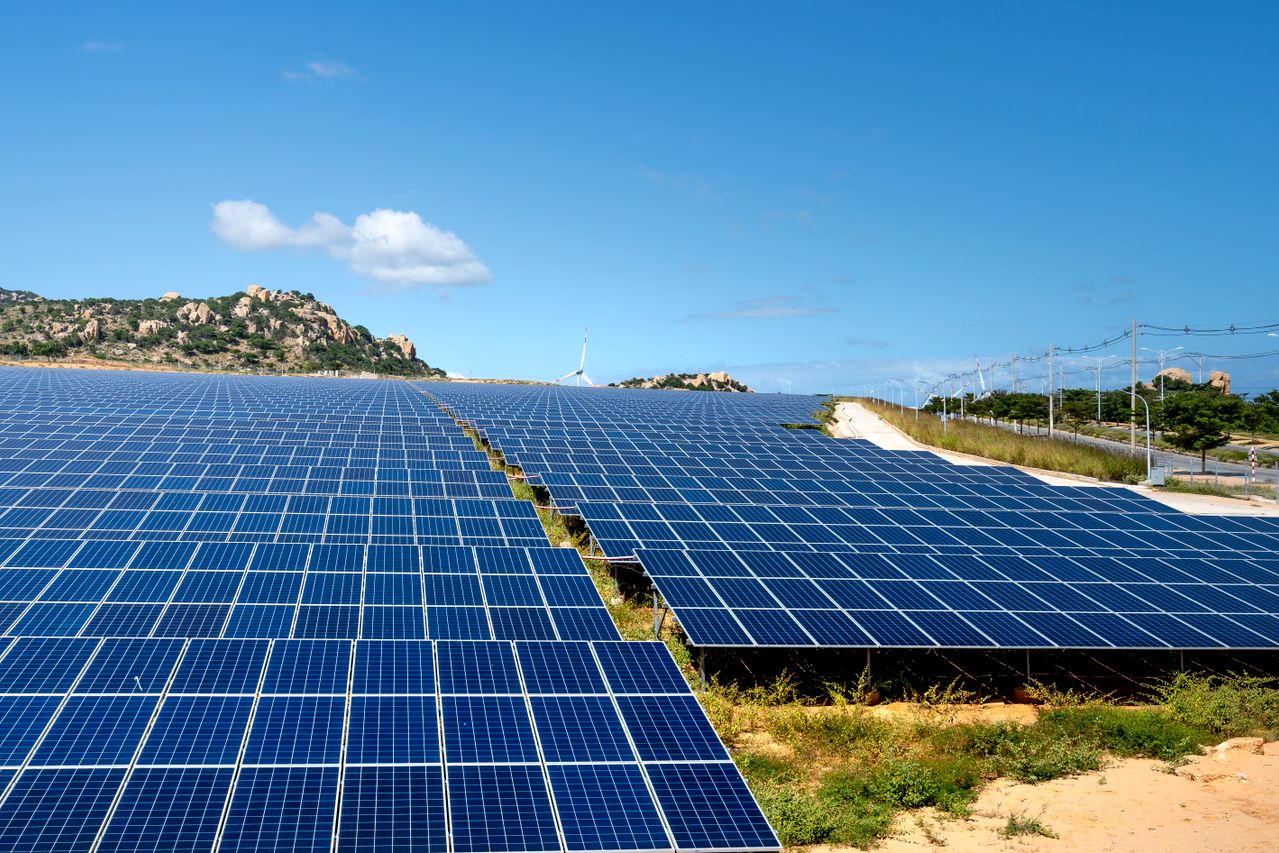
The Netherlands has now installed approximately 10 million solar panels with a combined installed capacity of 30 gigawatts. On sunny days, they generate roughly twice as much electricity as the country needs at that moment. Vast areas of fertile agricultural land have been converted into large-scale solar parks, while rooftops have been covered with solar panels at record speed thanks to government subsidies. Altogether, these installations now cover an area of approximately 20 square kilometres.
However, the report that has now come to light paints a completely different picture.

CO₂ Payback Period Exceeds the Lifetime of the Panels
The report reaches an alarming conclusion.
The so-called “carbon payback period”—the time required for a solar module to offset the CO₂ emissions generated during its production and installation through the electricity it subsequently produces—is likely to be longer than the module’s actual service life.
The report states:
“These solar panels will accelerate global warming.”
Even more concerning is the finding that this CO₂ payback period is likely to become even longer in the coming years because solar power plants will increasingly have to be shut down due to the growing surplus of electricity generation.
Report Disappeared Within the Ministry
The document was prepared in December 2024 on behalf of the Public Buyers Group for Sustainable Solar Modules, a consortium consisting of government agencies, municipalities, water authorities, and an energy company.
Since the beginning of 2022, the working group has examined key sustainability issues related to solar modules using scientific literature and expert interviews, including:
- actual service life,
- carbon footprint,
- toxic substances such as PFAS and lead,
- and the possible use of forced labour in the manufacturing process.
The original objective was to help public institutions procure more sustainable solar modules.
However, after the report was submitted to the Dutch Ministry of Economic Affairs, nothing happened.
Only an investigation by the newspaper De Andere Krant revealed that the ministry had received the document but did not incorporate its findings into its policy decisions.
The ministry’s explanation was:
“The conclusions were not sufficiently supported by generally accepted scientific evidence.”
Manufacturing Generates Enormous CO₂ Emissions
According to the report, almost all solar modules installed in the Netherlands are imported from China and are based on silicon cells. Their production is particularly energy-intensive.
Silicon is extracted from quartz sand and coal dust—a process that requires enormous amounts of electricity while also releasing CO₂ directly through the combustion of coal.
The subsequent purification and crystallisation of silicon also consume substantial amounts of energy.
Since approximately 65 percent of China’s electricity is still generated from coal-fired power plants, the resulting carbon footprint is correspondingly high.
According to the report, significant emissions are also generated during the production of other components, including:
- glass,
- aluminium frames,
- copper cables,
- steel support structures.
For rooftop installations, the authors calculated a total of 1,440 kilograms of CO₂ per installed kilowatt of capacity.
If all 30 gigawatts of solar capacity in the Netherlands had been installed exclusively on rooftops, this would already correspond to 43.2 million tonnes of CO₂, roughly equivalent to the annual CO₂ emissions of 2.5 million Dutch households.
The results are even worse for ground-mounted and floating solar power plants.
According to the report, their carbon footprint is 50 to 80 percent higher, partly because of additional steel structures, foundations, and longer cable connections.
A Shocking Calculation
The working group then calculated the actual CO₂ payback period for solar power installations.
The result was striking.
Approximately 95 percent of the solar modules installed during the past three years will require more than 25 years to offset the CO₂ emissions generated during their production and installation.
By contrast, the report estimates their realistic average service life at only 12 to 15 years.
In other words, most installations would have to remain in operation significantly longer than the authors believe they will actually last in order to offset their own CO₂ emissions.
Even the Experts Were Surprised
One of the experts involved in the analysis agreed to speak only on condition of anonymity. His identity is known to the newspaper.
He explained:
“At first, I thought there had to be an error somewhere in the calculations. But the more we analysed the data, the clearer it became that we were dealing with an enormous problem.”
Solar Power Plants Are Being Curtailed More Frequently
A key factor is the growing phenomenon of curtailment.
Because far more electricity is now produced on sunny days than the power grid can absorb, solar power plants are increasingly being shut down or forced to reduce their output.
As a result, they generate significantly less electricity than originally expected.
The report estimates that the proportion of curtailed generation could increase to 60 to 75 percent in the coming years.
The expert involved now believes that the real situation is even less favourable than the calculations suggested at the time.
Source: https://deanderekrant.nl/vernietigend-rapport-zonne-energie-verdwijnt-in-la/
Image: Pexels.com