

Moral hazard is when your brother-in-law borrows your car and drives it like a maniac, because if he wrecks it, it’s your car, not his. The risk is yours. The recklessness is his. And the fact that he faces no downside is exactly what makes him reckless in the first place. Of course, you could be hoping that he totals your car so you can get the insurance payout! The arch-Technocrats in Washington, DC have bonded themselves to our government apparatus in a way that creates multiple and persistent moral hazards that consistently favor Technocrats.
Posted By: Patrick Wood
The convergence of war, surveillance technology, and centralized government is no accident. It is the operating logic of technocracy—and war is its most powerful accelerator. —Patrick Wood
This paper will address some of the moral hazards that currently exist.
War has always served as a melting pot of state power. Conflicts have reliably expanded the reach of centralized authority, accelerated the introduction of experimental technologies, and normalized crisis-based government structures that persist beyond the crises that gave rise to them.
But war is different today, because those who profit from it are no longer just generals and munitions manufacturers. They are data scientists, artificial intelligence engineers, surveillance architects, and the venture capitalists who finance them. The moral hazards inherent in this new constellation are not accidental. They are structural. And they serve—whether intentionally or by implication—the advancement of technocracy. Moreover, technocrats encourage bureaucrats to make decisions that serve as a cover for their own agenda.
Technocracy replaces political judgment with algorithmic management, data with advice, and prioritizes efficiency over freedom. War is proving to be its most reliable incubator.
Risk I: The Emergency Authorization Structure
The first moral hazard begins with the emergency itself. Under the Defense Production Act of 1950, the federal government has broad statutory authority to enforce contract terms, redirect production capacity, and override ordinary commercial and legal safeguards when national security is threatened. In peacetime, this authority remains largely unused and is subject to political scrutiny and constitutional challenges. In wartime, it becomes a government tool of extraordinary scope. The companies most willing to abandon their own ethical obligations are rewarded with the most lucrative contracts in the world, while those that resist are not only overlooked but branded as threats to the supply chain. This is not the market. This is coercion disguised as public procurement.
When the Pentagon recently designated a major AI company as a national security risk for refusing to remove prohibitions on mass domestic surveillance and autonomous lethal targeting from its contract terms, it did not enforce any law. It sent a message to every other tech company in the ecosystem: compliance is not optional, and the price of conscience is exclusion.
The moral hazard is easy to see. Once wartime conditions are reached, the emergency approval structure transforms ethical resistance into institutional responsibility. The incentive gradient points in only one direction—to maximize the implementation of the most powerful surveillance and targeting systems available with the fewest possible restrictions on the market.
Risk II: War as a Product Laboratory
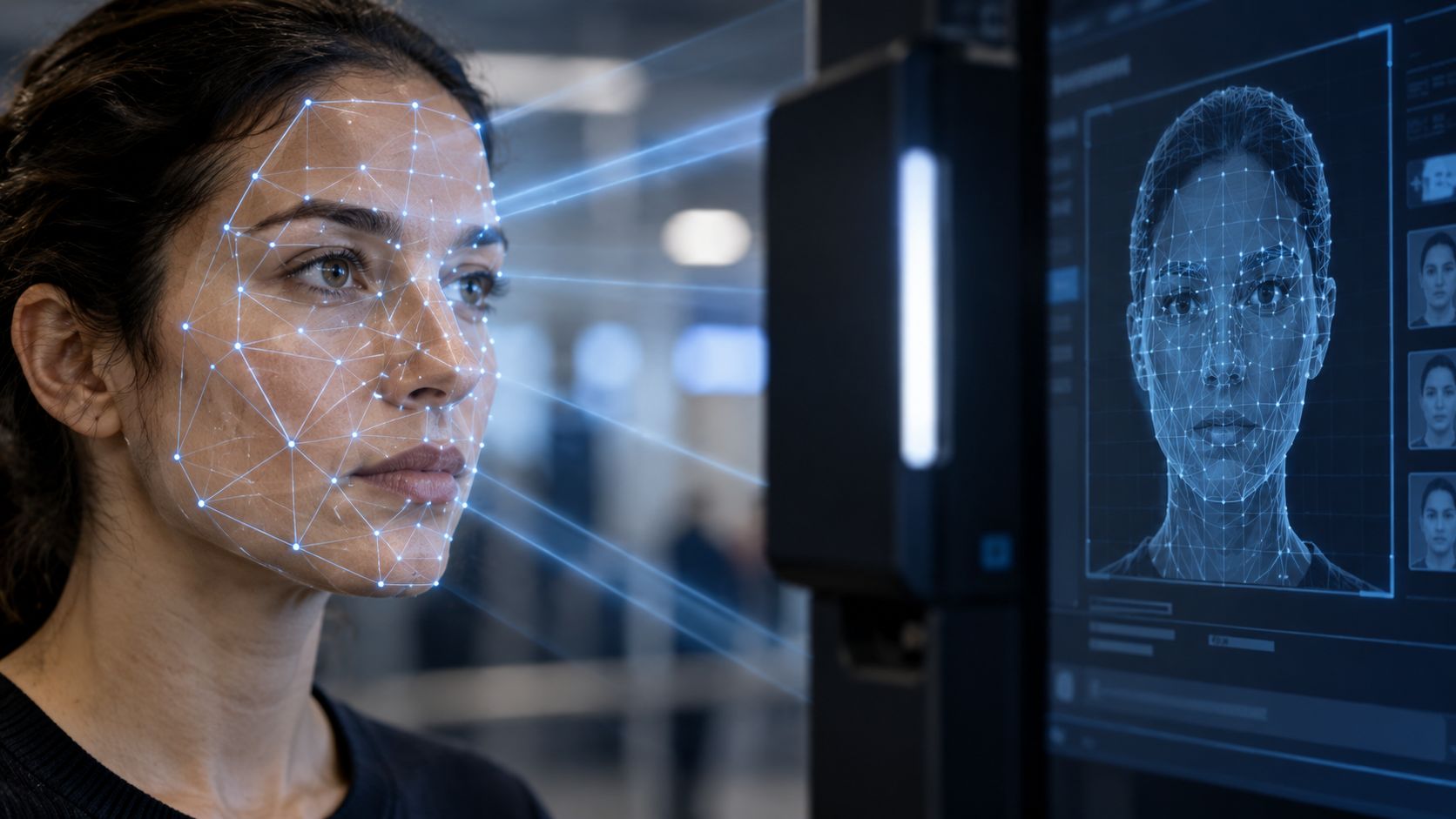
The second risk runs deeper because it is less visible. Conflict zones act as field laboratories for precisely the technologies that the architects of the surveillance state seek to normalize in both domestic and civilian settings. Deployment on the battlefield provides three things that are difficult to achieve in peacetime: extensive operational data, legal cover under martial law, and a compelling public justification—national security—that silences civilian resistance.
A field-tested AI for targeting, a surveillance platform honed on a war-torn population, a biometric identification system deployed in a reconstruction zone—each gains legitimacy simply by surviving deployment. The fact that it worked under fire is taken as sufficient evidence that it should work anywhere.
This is not speculation. It is a documented pattern of modern technocratic government. The surveillance architectures developed after 9/11 under FISA powers have been quietly extended to domestic law enforcement. Biometric systems designed for Iraq and Afghanistan were later integrated into immigration law. Drone protocols developed in declared combat zones were eventually used to manage domestic airspace.
War need not be designed to produce these outcomes. The incentive structure creates them automatically, as the tech sector benefits from scale, defense systems benefit from capability, and both sides benefit from the erosion of legal barriers that would otherwise separate the battlefield from the living room.
Risk III: A Vacuum of Accountability
The third moral hazard is perhaps the most philosophically destructive. When AI systems make or enable key decisions in place of human operators—target identification, threat assessment, resource allocation—accountability becomes structurally difficult to understand.
The military can blame the algorithm. The algorithm developer can claim to have operated within specifications. The contractor can claim secrecy. The political decision-maker can claim national security privileges.
The result is not so much an accountability gap as a systematic removal of it. And where there is no accountability, there is no deterrent to abuse.
This is crucial to the advancement of technocracy, because technocratic governance has always relied on the appearance of neutral and objective decision-making. The algorithm is presented not as an expression of political will but as a technical result—value-free, empirically grounded, and beyond ideological criticism.
When a human official refuses service or orders an attack, that decision is contestable. When a model does, the contestability is hidden behind layers of proprietary architecture, classified training data, and the cultural authority that is associated with anything labeled AI.
The accountability vacuum is not a flaw in the technocratic system. It is a characteristic of it.
Risk IV: Revolving Doors as Captured Judgment
The fourth risk is more personnel-based than political. The new military-industrial complex is not based primarily on hardware contracts. It is based on the movement of people between the national security apparatus and the technology sector.
Former intelligence officials are sitting on the boards of AI companies. Former Defense Department procurement officials are becoming lobbyists for the very companies they once awarded contracts to. Former White House technology advisors are moving directly to venture capital firms, which then win government contracts shaped by the same advisors’ earlier writings.
This is the revolving door. They create what might be called a judgment trap—a condition in which professionals who are supposed to assess the ethical and legal aspects of technology deployments are structurally inclined to minimize these concerns because their careers, networks, and identities pass through the very institutions they are supposed to assess.
This is not corruption in a simple transactional sense. It is something more insidious: the gradual homogenization of judgment within an elite that has ceased to see the world from the perspective of those most likely to be monitored, targeted, or controlled by the systems that construct them.
Risk V: The Race to the Bottom in Ethics
The fifth and perhaps most serious risk is the competitive landscape. Once most big tech companies drop their stated ethical constraints and sign comprehensive military use agreements, the remaining companies will face a clear and losing choice.
They can stick to their principles and lose contracts, data access, government relationships, and favorable regulatory treatment. Or they may follow the industry’s lead.
This is not a hypothetical dynamic. It is already a reality.
This is the moral hazard of systemic normalization. If ethical capitulation becomes the price of market participation, the minimum ethical standard of the entire industry will be lowered in line with the demands of the most aggressive institutional client.
And when that client is both the national security state and the largest single buyer of computing infrastructure on Earth, the gravitational pull is irresistible.
What is left after the race is all the worse is an industry that is constitutionally incapable of saying no—not because its employees lack conscience, but because the incentive architecture has made conscience structurally unavailable.
Profit privatized, risks socialized.
The architecture of all five of these risks boils down to a pattern that an economist would immediately recognize.
The rewards of technocratic warfare are privatized—contracts, data, market positions, infrastructure deals, and the regulatory takeover that comes with indispensability.
The risks are socialized.
The abuse of surveillance, the erosion of civil rights, autonomous lethality, the normalization of postwar emergency powers, and the permanent expansion of the technocratic state are not supported by the corporations and officials who built and deployed these systems, but by the populations who live within them.
This is the definition of moral hazard: if those who make the decisions that create the risks do not bear the consequences of those decisions, the incentive to self-restraint disappears.
As it stands, no defense technology company executive will be monitored by the artificial intelligence his company sold to the Pentagon. No venture capitalist who funded a surveillance platform will be tracked by the identification system his portfolio company developed for the reconstruction zone.
The asymmetry is complete.
And it is in this asymmetry that technocracy finds its most reliable engine of expansion.
Trump’s Cyber Strategy for America
Abstract moral hazard analyses benefit from concrete examples. In March 2026, the Trump administration released “President Trump’s Cyber Strategy for America,” a six-pillar national policy document that provides just such an example.
Given the moral hazard framework outlined above, this document is not simply a cybersecurity blueprint. It is a blueprint for the systematic institutionalization of each of the individual risks described here—worded in the language of liberty and defense, but structured according to the logic of technocracy.
The Missing Word
Perhaps the most significant moral hazard in the document is what it doesn’t say.
The word “oversight” does not appear once in the entire Cyber Strategy for America.
It does not include “accountability,” “judicial review,” “informing Congress,” “civil rights,” or “the Fourth Amendment.”
The document mentions privacy only once—in the context of protecting Americans from foreign surveillance platforms.
The architecture being built—public-private sector fusion, offensive cyber operations, agent-based artificial intelligence, deregulation, critical infrastructure integration—is designed to operate with maximum operational freedom and minimal institutional constraints.
This is not a cybersecurity strategy with protective bars.
It is a technocratic government structure, couched in the language of national defense.
An Old Story in a New Dress
What is unfolding is not unprecedented.
In 1961, Dwight Eisenhower warned of the military-industrial complex as a permanent lobbying apparatus for conflict that could gain “undue influence” over the democratic institutions it was designed to serve.
But he failed to foresee the extent to which this complex would eventually integrate the entire architecture of the digital surveillance state—data centers, AI platforms, biometric systems, and identification networks—and use them not only against foreign adversaries but also as tools of domestic governance.
War does not end at the border.
Technology does not stay on the battlefield.
A state of emergency does not end with the signing of a ceasefire.
The Cyber Strategy for America makes this clear.
It is the first major national security document to openly celebrate cyber operations in wartime as a blueprint for future action, commit to the implementation of “agent-based AI” without a framework of accountability, promise deregulation as a reward for private sector integration, and announce a “new level of relationship” between the state and the technology sector—in peace and war—without a single mention of surveillance, judicial review, or civil liberties.
It is, in the truest sense of the word, a technocratic government document.
And now it is the official cyber policy of the United States of America.
Source: https://www.technocracy.news/the-moral-hazards-of-war-and-how-they-accelerate-technocracy/