
Is a donated organ just an organ? Or can it really change who you are? Let’s look at the facts.
The following information is based on a story originally published by A Midwestern Doctor. Key details have been shortened and edited for clarity and relevance. The original story can be found here.
Amy Tippins was dying at age 17—of liver failure. The transplant saved her life.
After the surgery, she said, “Some of my character traits changed.”
Amy suddenly felt a passion for home projects that she had never been interested in before.
“What’s going on?” she wondered. So she went to find the obituary of the stranger who had given her the liver, and she made a startling discovery:
“Not long after the surgery, some things about me and some of my characteristics changed… I really started to enjoy projects like laying the floor myself. I had never seen a floor laid before. I had never seen anything like that done.”
“I knew he was 47 and died in a car accident in Columbus, Georgia. So I went to the library and started looking through obituaries from that time. And that’s when I came across his obituary.”
“I found out he was a police officer. He was 47 years old and his name was Mike. His sister told me he did a lot of the remodeling on his house himself. He also liked to work with his hands. He enjoyed doing projects.”
“When I found out who my donor was, it made a lot more sense to me why some of my things and some of my characteristics changed after the transplant.”
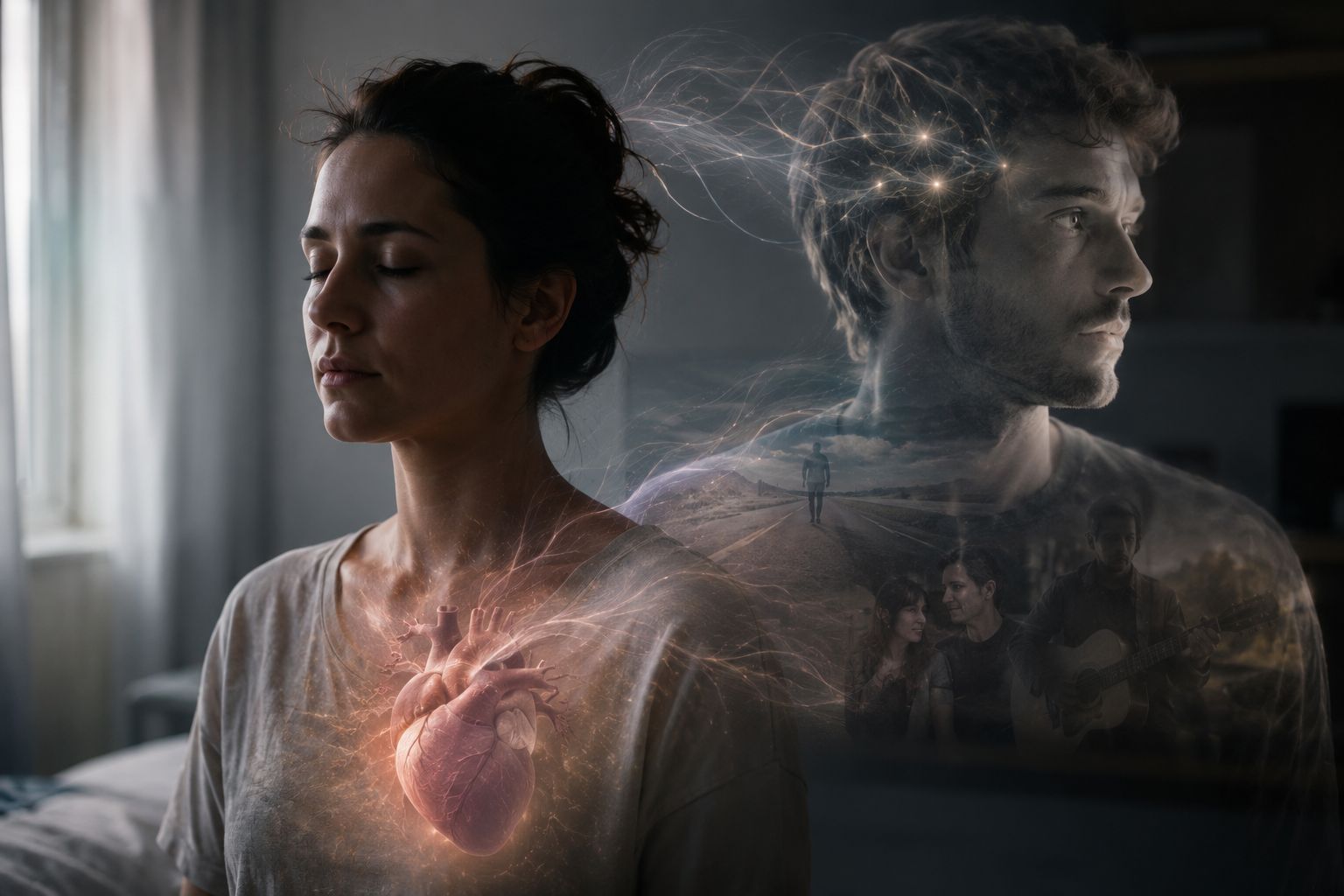
Is a donated organ just an organ? Or can it actually change who you are?
Conventional medicine laughs at the idea. But is it really that crazy?
Let’s look at the evidence.
When organ transplants became possible, doctors called it a miracle. And it is. Giving someone a second life through the death of another person is incredible.
But the story is not quite so simple.
Often, the organ seems to be accompanied by something else. Something that no one agreed to.
The standard model is quite simple. The heart is a pump. The kidney is a filter. Personality and memory are located in the brain and nowhere else.
Replacing a failing organ with a healthy one only restores the “gauge,” not the person.
But so far, it has been nothing more than a conjecture.
For decades, more and more cases have emerged that prove otherwise.
It is well known that transplants are difficult to keep alive.
Within ten years, almost half of transplanted hearts fail. For lungs, the figure is almost three-quarters. Kidneys and livers are not far behind.
Recipients pay for their survival with immunosuppressants that can cost up to $30,000 a year, permanent abstinence, endless blood tests, and a life in which they must constantly avoid infections.
That is the price of this gift. The high price.
And that is only the part that medicine talks about.
Because in addition to the medical findings, transplant patients have repeatedly reported something much stranger.
No medical complications.
Changes that led to them no longer being the same people after the transplant.
At the University Hospital in Vienna, 47 heart transplant patients underwent a thorough examination.
Most emphasized that their personalities had remained unchanged – although many indications indicated that this was not the case.
A clear minority reported something they could not explain: new character traits that they thought belonged to someone else.
They described the feeling of having to deal with memories that were not their own.
About one in ten heart recipients report experiencing emotions that they believe came from their donor.
The best-documented case is that of a woman named Claire Sylvia.
At the age of 47, she received a new heart and new lungs and almost immediately developed a strong craving for beer and chicken nuggets—foods she had never craved in the previous four years of her life.
A few months later, she had a dream about a young man named Tim. In the dream, they kissed and she felt as if she was breathing him in. She woke up knowing that Tim was her donor and that part of his body now lived on inside her.
Friends said that she walked differently. She felt more aggressive, more confident, and attracted to blondes, as if she had a new energy flowing through her.
She then tracked down the donor through an obituary. His name was Tim L. His family confirmed that he loved chicken nuggets and beer—the exact same tastes that had appeared in her body.
One could dismiss a strange desire. Or a one-time dream.
But the name, face, and favorite foods of a dead person all pop up in the mind of someone who never knew them—you can’t just ignore that.
Sylvia eventually said that the only thing that brought her relief was a ritual—a way to “release” the donor’s spirit.
This is where research comes in.
Neuropsychologist Paul Pearsall—a transplant patient himself—set out to document this phenomenon properly. He interviewed 73 heart recipients, 67 other organ recipients, and the families of 18 deceased donors.
He wasn’t collecting ghost stories. He published his findings in a peer-reviewed scientific paper with careful citations.
And in all these interviews, the same patterns emerged over and over again: recipients reliving the death of a donor they had never heard of; food and music preferences that changed to match the donor’s preferences; in one case, a lifelong lesbian discovered she was attracted to men and married one of them.
The themes were too consistent to be a coincidence.

Then there are the cases that simply cannot be disproved.
An eight-year-old girl received the heart of a murdered ten-year-old boy. She began to have vivid nightmares about the murder.
Her descriptions were so accurate that the police opened an investigation—and the details of the time, the weapon, the place, and the victim’s last words were so precise that the killer was found and convicted.
A child’s nightmares stemming from a transplanted heart led to the solution of a murder case.
That sounds incredible.
Transplants save lives every day, and most recipients never report any unusual experiences associated with them.
But “most” does not mean “all.”
And the exceptions are so strange that they warrant closer examination.
This pattern repeats itself over and over again with different people who could not have known each other.
A man named William Sheridan could draw hardly better than a child. After a heart transplant, he suddenly became able to create detailed paintings of animals and landscapes. His donor was a passionate artist.
A 47-year-old foundry worker won the heart of a 17-year-old and suddenly developed a taste for classical music. He laughed at this, assuming the teenager would prefer rap. Then he learned that the boy had died on his way to violin lessons, literally clutching his violin case.
The woman leaned over the transplant recipient and whispered a confidential phrase she had shared with her late husband, David: “Everything is copacetic.” The recipient’s mother paled. Her son began to use that very word—all the time—but only after the operation.
None of these people knew their donors. None of them had a recipe.
And yet the talent, the phrase, the music kept reappearing—fitting the stranger whose body had stopped working but who had enabled another body to continue living.
There are far more cases than can fit in one thread—including donors who apparently “talked” to their grieving families about their recipients.
The obvious objection is that it’s just a matter of coincidence. So why does it only happen to some recipients?
That’s exactly the question Pearsall set out to answer. In his study of who is sensitive, he found a recurring profile—eighteen common characteristics.
Those who were sensitive tended to be more open than rigid, extremely creative, had a strong body awareness, were drawn to music, had vivid dreams, and were described as intuitive even before surgery.
A random coincidence wouldn’t neatly classify into personality types, would it?
These experiences are not limited to the heart.
Pearsall also observed changes in liver and kidney transplant recipients, albeit in a milder form. And here’s the incredible part: the emotional changes tended to correspond to what traditional Chinese medicine attributes to each organ.
Liver: Anger. Lungs: Sorrow. Kidneys: Fear. Heart: Joy.
Clinicians working with recipients report the same consistency—as if each organ carries its own emotional signature.
This raises an uncomfortable question about memory itself.
If a personality trait or a specific word can persist in a transplanted organ, then that memory may not be locked away in the brain as we’ve been taught.
Memory research already suggests this—damage to certain areas of the brain often does not result in the loss of specific memories, leading some to believe that the brain functions more as a receiver than a hard drive. A way to access information stored elsewhere.
Perhaps even in matter that once belonged to someone else.
Living with a heart transplant is a psychological challenge in itself—and not for the reasons you might expect.
For many recipients, the hardest part isn’t the surgery or the medication. It’s the gradual sense that something foreign has entered them and may be affecting their personality. Many worry less about the donor’s medical history than about their character.
Pearsall observed that recipients went through stages that were very similar to grief: fear and anger, then euphoria, followed by depression and guilt, and finally a crossroads—where most fell into even greater denial, and about one in ten developed a deep, almost devotional interest in who their donor was.
You can tell by the language. Those who resist it say “heart.” Those who have come to terms with it say “my heart.”
A reporter from the New York Times attended a Valentine’s Day party for heart transplant recipients.
The reporter wrote that people in the room spoke in hushed voices and with great reverence—about the angel in their chests, the responsibility they now carried, the little prayer they said for the other person who now lived inside them.
These are not esoteric marginal figures. They are perfectly ordinary people who have been given a second heart and are quietly making room for the person from whom it was taken.
Health professionals working in the field of mind-body medicine describe transplanted organs as carrying “trapped emotions”—and they say that helping recipients release these emotions can improve their quality of life, sometimes the function of the organs, and encourage the body to accept the organ rather than reject it.
Sylvia described her own experience: She said that after the ritual to release Tim’s spirit, she finally felt whole again. After that, she no longer dreamed of him.
The history of organ transplants has a darker side.
Organs are scarce, and transplants can cost up to two million dollars—a circumstance that has led to a global black market in organs from people who never consented to donate.
In the United States, donors are usually declared “brain dead.” This means that while the organ is still functioning, the person “no longer exists.” But there are a disturbing number of documented cases of paralyzed, seemingly unresponsive patients regaining control of their bodies—sometimes just before the organ is removed.
This raises a question that is almost too disturbing to ask. If consciousness can travel with an organ, what happens when a person has an organ removed while, in a sense, it is still present—and they are deeply afraid of what would happen to it?
There is a darker side to the transplant story.
Organs are scarce, and transplants can cost up to nearly two million dollars—conditions that have built a global black market, including organs taken from people who never agreed to give them.
In the US, donors are usually… pic.twitter.com/x26ZQCwqGE
— The Vigilant Fox 🦊 (@VigilantFox) June 29, 2026
The full article delves deeper into therapies that have made it possible to restore functioning to failing organs without transplantation, evidence that many patients classified as “brain dead” are not, in fact, brain dead, and methods that doctors use to address the trauma trapped in the donor.
This is the part of the story that conventional medicine refuses to touch.
It’s worth keeping two thoughts in mind at the same time.
Skeptics describe it all as coincidence, and that explanation should always be kept in mind.
But coincidences don’t usually repeat themselves with the same characteristics across researchers, across cultures, and across decades.
If even a fraction of these descriptions reflect anything real, then your self is not locked away in a skull. Part of what makes you who you are could be spread throughout your body—written into your tissues, transported in your blood, and able to outlive the rest of you.
Some who have never had a transplant but have received massive blood transfusions describe milder versions of exactly the same phenomenon.
Modern medicine developed organ transplantation to transfer parts between bodies. But perhaps we have been transferring more than just parts all this time.
The mystery is not just where consciousness ends. It is rather whether it ends at the boundaries of the human at all—or whether a part of the human can continue to live, remember, and communicate from the body of a stranger.
We have expanded the boundaries of medicine. In doing so, we may have crossed the boundary of identity without realizing it.
Source: https://www.midwesterndoctor.com/p/the-mystery-of-transplanted-consciousness